Monkeys also react negatively to 'uncanny valley' stimuli
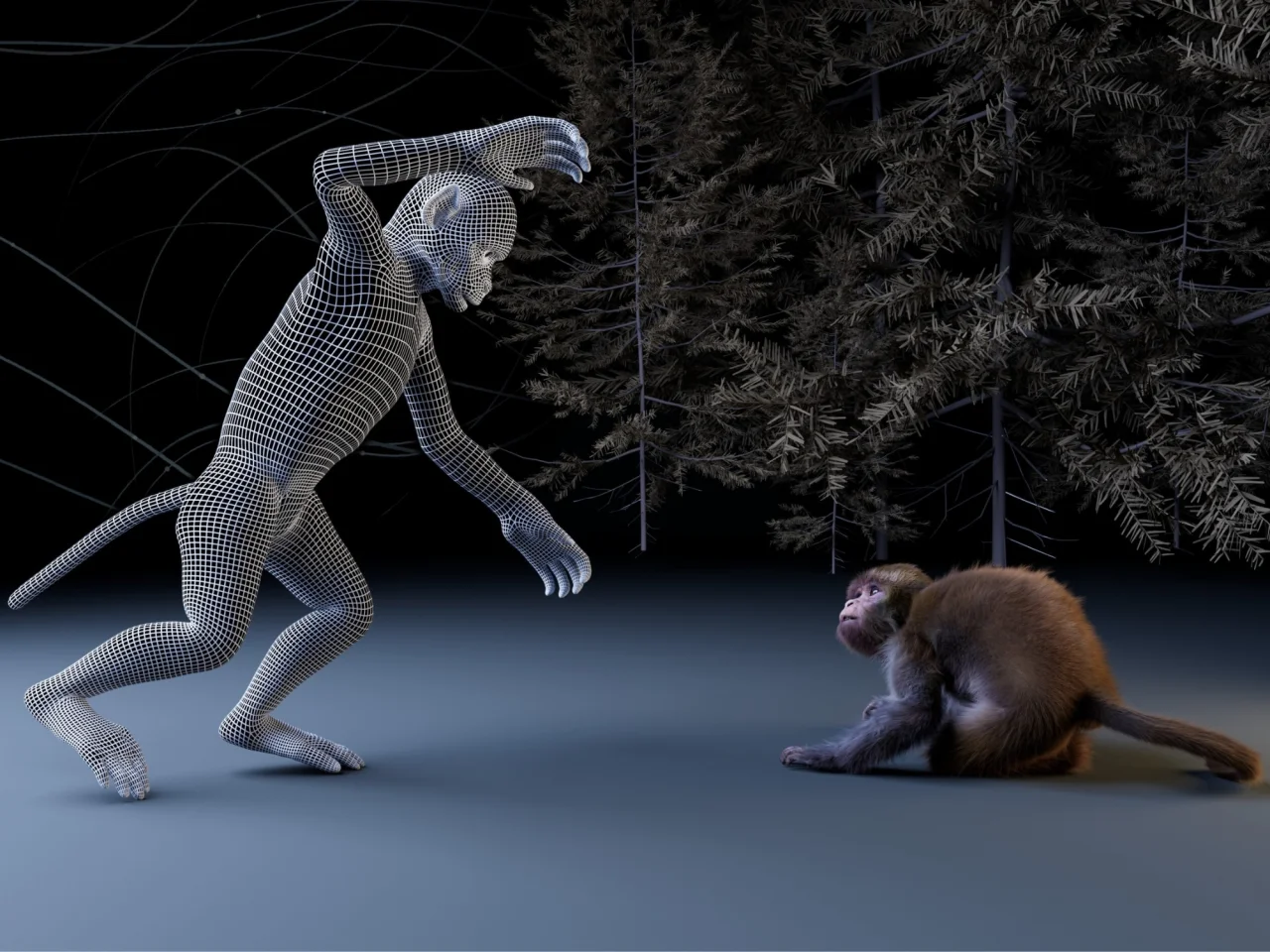
Researchers have discovered that monkeys, like humans, exhibit discomfort when presented with stimuli that fall into the 'uncanny valley.' This phenomenon occurs when artificial representations of faces are nearly, but not perfectly, realistic. Such stimuli are too lifelike to be considered cartoons but too artificial to be perceived as genuine, leading to a sense of unease. The study suggests that this negative reaction to near-perfect simulations is not exclusive to humans. The findings have implications for understanding perception and the development of advanced CGI and robotics. It highlights a potential evolutionary basis for recognizing and avoiding subtly flawed representations. This could be relevant in fields ranging from animation to the design of human-robot interactions.
The 'uncanny valley' effect, observed in both humans and now monkeys, suggests a fundamental biological mechanism for distinguishing genuine biological entities from artificial imitations. This has significant implications for the future development of AI-driven avatars, robotics, and virtual reality. As technology advances towards creating increasingly realistic digital and physical representations of life, understanding these perceptual thresholds is crucial. Failure to account for the uncanny valley could lead to user rejection of advanced technologies, hindering adoption and trust. Future systems will need to navigate this zone carefully, either by embracing clear stylization or achieving near-perfect realism to avoid triggering innate avoidance responses.
AI-generated to prompt reflection — not editorial opinion, not advice, not a statement of fact. How this works.