Moon's Mass vs. Gravity: Understanding the Discrepancy
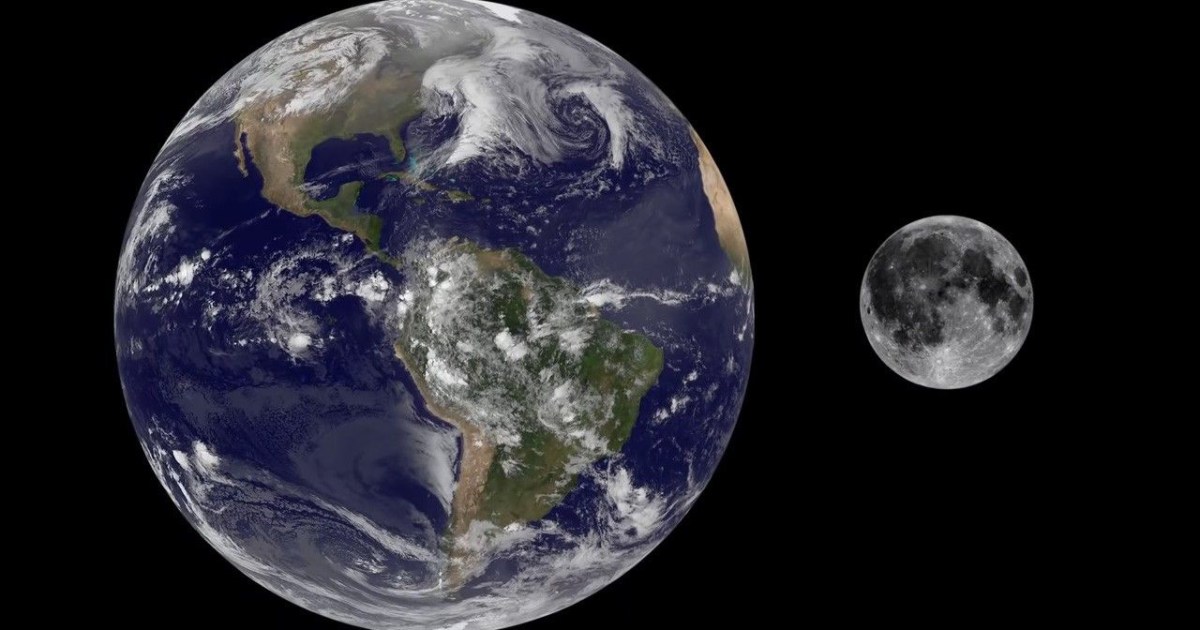
The question arises as to why the Moon's mass is approximately 1% of Earth's mass, yet its gravitational pull is about 17% of Earth's gravity. This apparent discrepancy prompts an inquiry into the relationship between mass and gravitational force. The explanation lies within the framework of the universal law of gravitation. This fundamental law dictates how gravitational forces operate between celestial bodies. While mass is a primary factor in determining gravity, it is not the sole determinant. The universal law of gravitation provides the scientific principles to reconcile the observed values. Understanding this law allows us to comprehend why the Moon exerts a stronger gravitational influence than its mass alone would suggest. The relationship is more nuanced than a simple direct proportion. The universal law of gravitation offers a comprehensive model for these interactions.
The user's question highlights a common misconception regarding the direct proportionality between an object's mass and its gravitational pull. The universal law of gravitation, as described by Newton, clarifies that gravitational force is dependent on both the masses of the interacting objects and the distance between their centers. While the Moon's mass is significantly less than Earth's, its proximity to Earth amplifies its gravitational effect. This principle underscores the importance of considering all variables in physical laws, not just the most apparent ones. Understanding these nuances is crucial for accurate scientific comprehension and for appreciating the complex dynamics of celestial mechanics. It also serves as a reminder that intuitive estimations can sometimes diverge from scientific reality, necessitating a deeper dive into established physical principles.
AI-generated to prompt reflection — not editorial opinion, not advice, not a statement of fact. How this works.