Moonshine AI Brings Local Voice Control to Raspberry Pi Pico 2 W
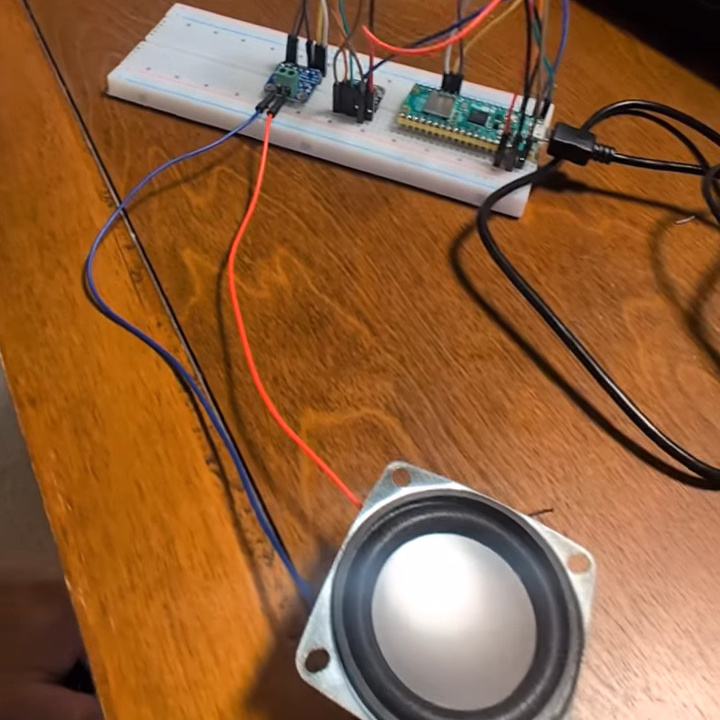
Moonshine AI has developed a new voice control toolkit designed to run locally on a Raspberry Pi Pico 2 W microcontroller. This innovation allows for voice-controlled appliances without relying on cloud-based processing. The voice interface is structured into distinct segments, enabling sophisticated command recognition and execution directly on the device. This approach enhances privacy and reduces latency, as data does not need to be transmitted to external servers for processing. The Raspberry Pi Pico 2 W, a low-power, cost-effective microcontroller, makes this advanced functionality accessible for a wide range of embedded systems and IoT devices. Moonshine AI's solution democratizes voice control technology, moving it from expensive, high-power systems to more compact and affordable hardware. This development could pave the way for a new generation of smart home devices and other applications that benefit from on-device voice interaction. The toolkit aims to simplify the integration of voice capabilities into new and existing products, offering a flexible platform for developers.
The integration of local voice processing onto low-power microcontrollers like the Raspberry Pi Pico 2 W represents a significant shift in edge computing capabilities. By moving voice recognition from the cloud to the device, Moonshine AI addresses growing consumer concerns around data privacy and security. This distributed intelligence model also promises reduced operational costs for manufacturers and improved responsiveness for end-users. However, the trade-off often lies in the computational complexity that can be handled locally, potentially limiting the sophistication of voice commands compared to cloud-based systems. Future developments will likely focus on optimizing AI models for embedded hardware and exploring hybrid approaches that balance local processing efficiency with cloud-based power for more complex tasks. This trend aligns with the broader technological imperative to decentralize computation, enabling more resilient and personalized user experiences in the burgeoning AI era.
AI-generated to prompt reflection — not editorial opinion, not advice, not a statement of fact. How this works.