Moral leadership scarce among world leaders, Pope offers contrast
Simon Tisdall, a Guardian foreign affairs commentator, argues that current global leadership is characterized by a profound moral deficit, particularly among figures like Donald Trump, Vladimir Putin, and Benjamin Netanyahu. These leaders, he contends, exhibit a shared tendency towards violence, a lack of empathy, and significant self-regard, often coupled with paranoia. The most concerning commonality, according to Tisdall, is their apparent disregard for or inability to comprehend fundamental moral standards, leading to actions that are fundamentally immoral in their public lives.
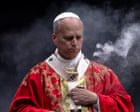
This 'moral malaise' is presented as contagious, impacting the wider world. While acknowledging that absolute moral definitions are historically contentious, Tisdall points to a broad societal consensus on basic moral principles such as the wrongfulness of killing, stealing, cheating, and lying. He notes that despite an increasingly secular age, a significant majority of the global population, 76% in 2020, still identify with a religion, underscoring the persistent importance of individual and collective morality. In this context, Pope Francis, the head of the Catholic Church, is highlighted as a rare example of moral leadership, offering a stark contrast to the prevailing political landscape.
The commentary posits a correlation between the perceived moral failings of specific political leaders and a broader societal challenge in maintaining ethical standards. It suggests that the actions of prominent figures can influence public discourse and individual behavior, potentially normalizing or exacerbating moral ambiguity. The analysis frames this not as a failure of individual character alone, but as a systemic issue where the erosion of universally recognized moral frameworks can have far-reaching consequences. The piece implicitly questions the structures and incentives that elevate individuals with questionable ethical records to positions of global influence, and contrasts this with the symbolic role of religious institutions in upholding moral principles. Future considerations may involve examining the interplay between governance, media narratives, and the cultivation of ethical leadership in an increasingly complex geopolitical environment.
AI-generated to prompt reflection — not editorial opinion, not advice, not a statement of fact. How this works.