Moroccan Youth Risk Lives for Spain Amidst Economic Despair
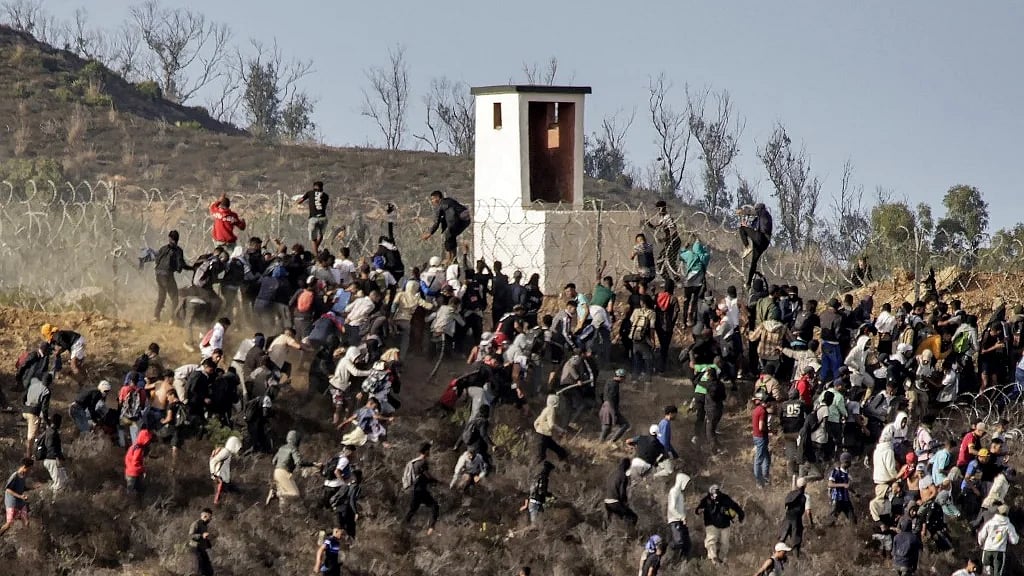
Thousands of young Moroccans are risking their lives to reach Spain, driven by a pervasive sense of economic hopelessness and the allure of a better life depicted on social media. Hamza, a 26-year-old from the coastal city of Imsouane, shared his concern for childhood friends who attempted the perilous journey to the Spanish enclave of Ceuta in September. These young men, trapped in a cycle of poverty, saw the dangerous crossing as their only viable option. The September incident saw nearly 4,000 Moroccans and sub-Saharan Africans attempt to breach the border into Ceuta, a Spanish territory and one of the EU's only African land borders. Many were apprehended, and accusations of mistreatment by Moroccan authorities surfaced, though denied by officials. Social media platforms like TikTok and Instagram are flooded with aspirational content of life in Europe, often omitting the harsh realities of sleeping on streets or struggling for survival. This phenomenon, fueled by a term 'Harraga' meaning those who burn their identities to migrate illegally, has become a significant driver of irregular migration. Experts suggest this surge is not just about seeking economic opportunity but also a form of political protest against Morocco's socio-economic conditions. Unlike previous mass migrations, the September attempt was largely self-organized by Moroccan youth via social media, bypassing traditional smugglers. Notably, many participants were employed and earning a modest income, indicating that desperation, not just destitution, is a key motivator. The stark contrast between the curated online portrayal of European life and the difficult reality faced by migrants, including those who have been in Spain for years, highlights the profound disillusionment driving these risky endeavors.
The reported surge in Moroccan youth attempting to reach Spain underscores a critical disconnect between perceived opportunities in Europe and the socio-economic realities within North Africa. Social media's curated portrayal of European life creates a powerful, albeit often misleading, incentive structure that can overshadow the significant risks involved in irregular migration. This phenomenon suggests a systemic failure to provide adequate economic prospects and social mobility for a large segment of the youth population, leading them to view perilous journeys as their only viable path. The self-organization of these migration attempts via social media indicates a growing agency among young people, potentially reflecting a broader dissatisfaction with existing governance and economic policies. Future policy considerations should address the root causes of this disillusionment, focusing on sustainable economic development and improved living standards within Morocco to mitigate the allure of high-risk migration.
AI-generated to prompt reflection — not editorial opinion, not advice, not a statement of fact. How this works.