Morocco's World Cup Loss Sparks Celebrations and Minor Clashes in Dutch Cities
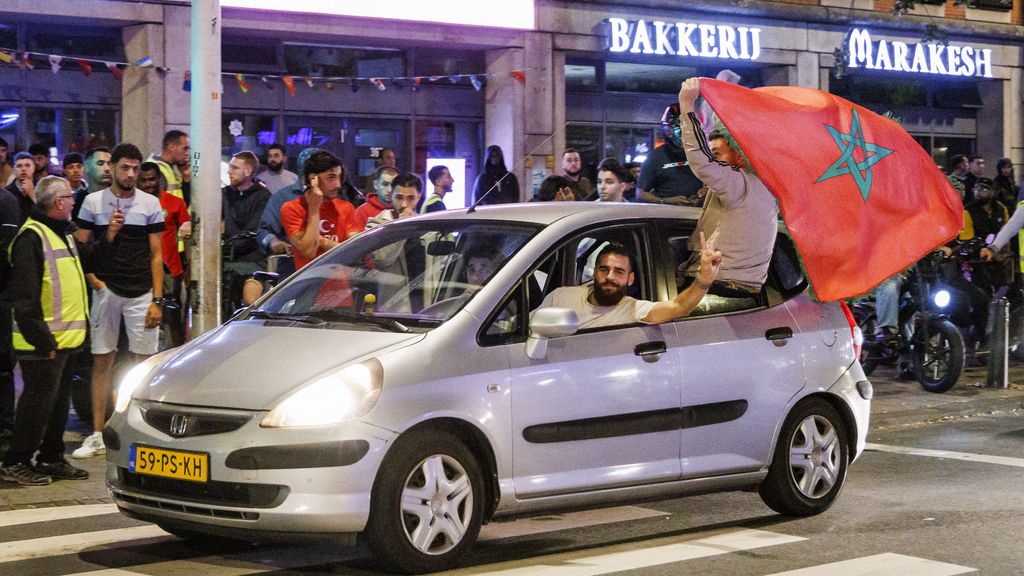
Following Morocco's 2-0 defeat to France in the World Cup quarterfinals, fans took to the streets in several Dutch cities, including Amsterdam, Rotterdam, and The Hague. Large crowds gathered, with fireworks and car horns creating a festive atmosphere. In most locations, the majority of supporters dispersed after police urged them to leave. However, riot police were deployed in the three cities to clear streets and squares, resulting in several arrests, though the exact number remains unknown. Amsterdam police described the atmosphere during the match as 'amicable and festive,' with most fans reportedly going home disappointed after the game. A small group remained in some areas, leading to instances of arson and projectiles being thrown at police. Rotterdam police noted the atmosphere was 'generally quite good,' and the evening in The Hague concluded without major incidents. In France, fans of both the French and Moroccan teams also gathered in large numbers, notably on the Champs-Élysée in Paris, where a significant police presence was observed. No major incidents have been reported there thus far.
The post-match reactions highlight the complex interplay of national pride, sporting outcomes, and public order management. While the majority of fans expressed their support and disappointment peacefully, isolated incidents of vandalism and confrontation with law enforcement underscore the challenges in managing large public gatherings. The response from Dutch police, involving public appeals and subsequent riot control measures, reflects a calibrated approach to maintain order while acknowledging the celebratory nature of fan engagement. The contrast between widespread peaceful gatherings and localized disturbances suggests that factors such as crowd density, the presence of agitators, and the effectiveness of de-escalation strategies significantly influence the overall outcome. Looking ahead, urban planning and crowd management strategies will need to continue evolving to accommodate passionate fan bases while mitigating risks, potentially through designated fan zones or enhanced communication protocols, especially as major sporting events become increasingly globalized and emotionally charged.
AI-generated to prompt reflection — not editorial opinion, not advice, not a statement of fact. How this works.