Mother Goes Viral for Home Workouts Using Household Items
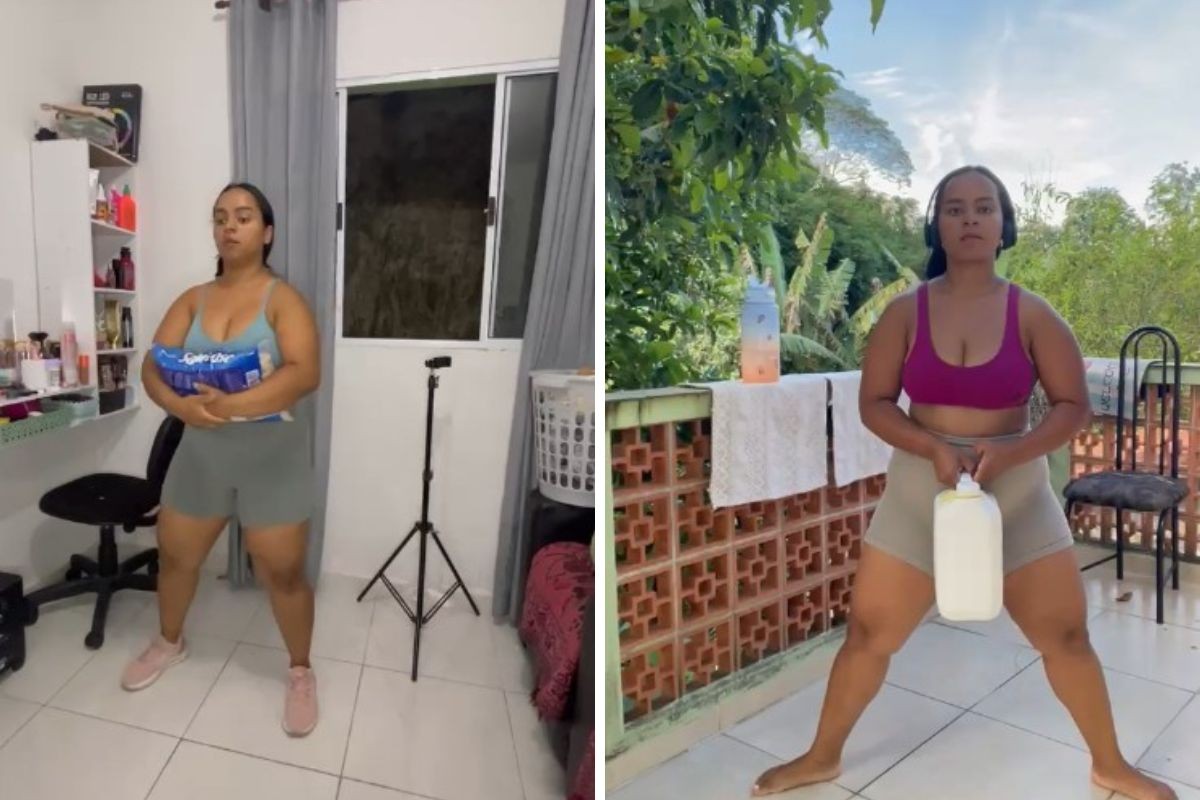
Flávia Fructoso, a mother of three from São José dos Campos, Brazil, has gained significant online attention for her innovative approach to fitness. After prioritizing her children's needs over her own self-care, Fructoso decided to document her weight loss journey and home workouts on social media to inspire other women. Lacking gym equipment, she creatively uses a 5-kilogram bag of rice and a cleaning product jug as weights. Fructoso openly shares her progress, including visible skin laxity and diastasis recti, without filters or artificial enhancements, aiming to portray a realistic fitness journey. One of her videos has garnered nearly 1 million views, resonating with many mothers who identify with her situation. The turning point came about a year after her second child's birth, when she weighed more than her 1.90-meter tall husband, prompting a profound realization of how much she had neglected herself. Despite discovering a third pregnancy before reaching her initial weight loss goal, she resumed her healthy eating and exercise routine post-gestation and has already lost eight kilograms. Her workouts are integrated into her daily life, with her three children often present and involved in some capacity, demonstrating how she balances childcare with personal fitness. Fructoso also adapted her diet to be budget-friendly, focusing on affordable options like eggs and sardines, guided by a nutritionist from the public health system (SUS). She credits the support of her online community for providing the motivation to continue her efforts.
This narrative highlights the powerful influence of relatable content and community support in achieving personal goals. Fructoso's strategy of showcasing authentic challenges and resourcefulness, rather than idealized fitness, democratizes the pursuit of health and wellness. It underscores a broader societal shift where individuals leverage digital platforms to build supportive networks and share practical solutions, particularly for those facing socioeconomic constraints or balancing multiple responsibilities. The accessibility of her methods, using common household items and public health resources, offers a replicable model for others. This approach challenges the often-exclusive and expensive nature of the fitness industry, suggesting that effective self-improvement can be integrated into everyday life, regardless of financial or logistical barriers. The story implicitly critiques systems that may not adequately support maternal well-being or accessible health resources, while celebrating individual agency and the power of shared experience in overcoming adversity.
AI-generated to prompt reflection — not editorial opinion, not advice, not a statement of fact. How this works.