Mothers of July Uprising Martyrs Demand Justice Two Years On
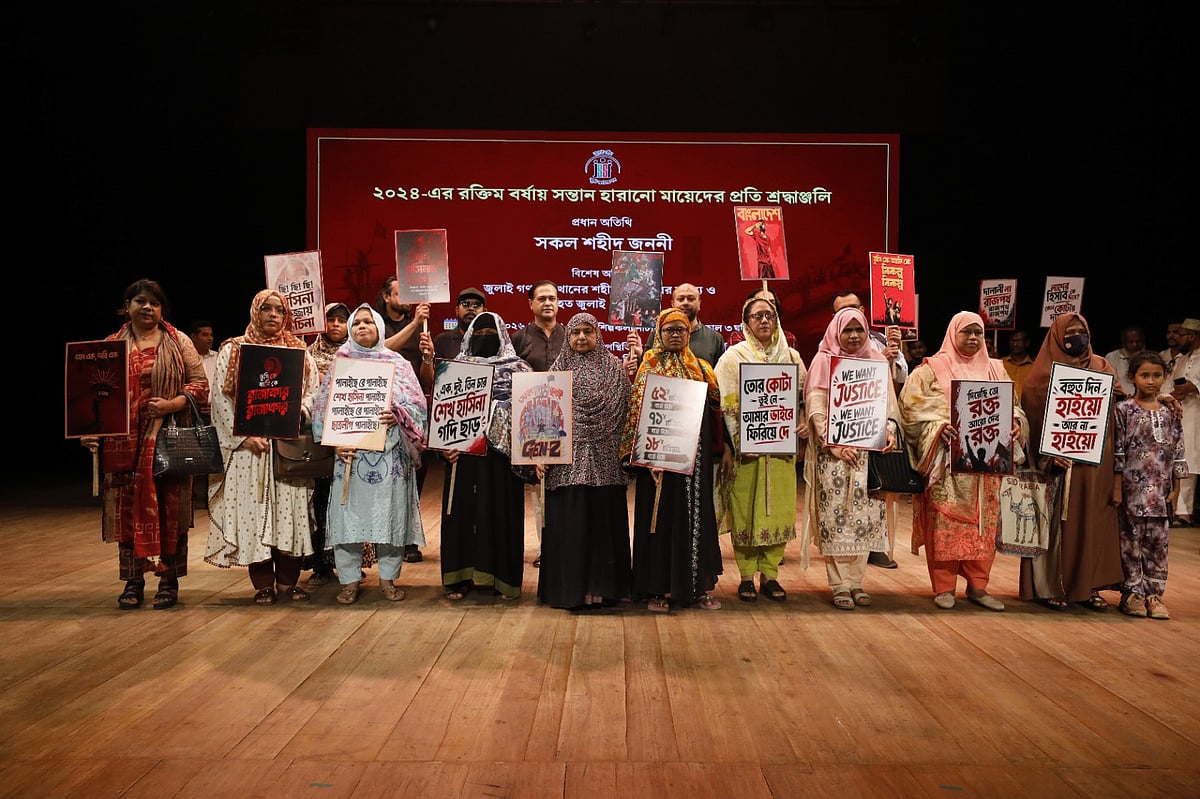
Mothers of those who died during the July Uprising are demanding justice two years after the events, expressing deep frustration over the lack of accountability. Parveen Akhtar, mother of Imam Hasan Bhuiyan Taiym, stated she witnessed the perpetrators of her son's shooting and assault on CCTV but no legal action has been taken. She urged the government to ensure justice for her child and all others who were killed. At an event organized by the July Martyr Memorial Foundation in Dhaka, mothers of martyrs shared their grief and called for the implementation of the 'July Charter' and proper care for the injured. Asma Akter, mother of martyr Meherunnesa Tanha, warned that the government's failure to act would mean the mothers would carry this pain indefinitely. Parveen Akter, mother of martyr Mehdi Hassan, recounted that her son was shot three times by police despite having no fault, and expressed uncertainty about ever receiving justice. Asaduzzaman Fuad, General Secretary of the Amar Bangladesh (AB) Party, emphasized that the events of the uprising cannot be forgotten, as only those present can truly comprehend them. Nusrat Tabassum, a Member of Parliament from the National Citizen Party (NCP), asked the mothers to accept them as their children, acknowledging that the sacrifices made paved the way for a new Bangladesh. Photographer Shahidul Alam warned that failing to build the Bangladesh envisioned by the martyrs would be a betrayal of their sacrifice and noted that some forces wish for the martyrs to be forgotten. Singer Asif Akbar announced that all audio-visual revenue from a patriotic song about the uprising, released at the event, will be donated to the July Foundation for the next 60 years, calling it the government's moral duty to support the foundation. The event was moderated by Lieutenant Colonel (Retd.) Kamal Akbar, CEO of the July Martyr Memorial Foundation, and also featured speeches from other mothers of martyrs.
The persistent calls for justice by the mothers of the July Uprising martyrs highlight a critical governance challenge: the perceived failure of state institutions to provide accountability for alleged state-sanctioned violence. This situation raises questions about the efficacy of legal and investigative processes when dealing with politically charged events. The mothers' appeals, amplified by civil society figures and political actors, underscore the societal demand for transparency and due process. From a future-oriented perspective, the unresolved grievances could continue to fuel social distrust and political instability, potentially impacting the legitimacy and long-term stability of governance structures. Ensuring that all citizens, regardless of their involvement in political movements, have access to fair and timely justice is fundamental for building a resilient and equitable society in the digital age.
AI-generated to prompt reflection — not editorial opinion, not advice, not a statement of fact. How this works.