Motorcyclist Dies After Collision on Padre Manoel da Nóbrega Highway
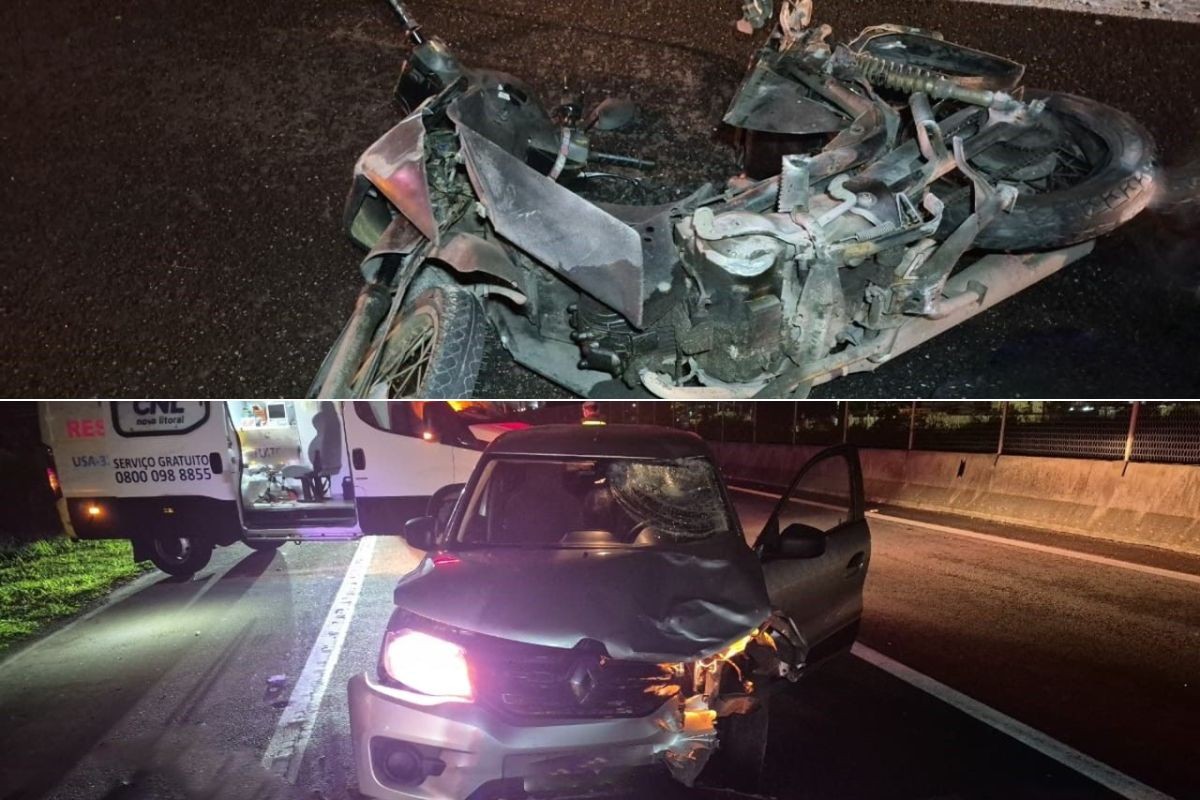
A motorcyclist tragically lost their life on the Padre Manoel da Nóbrega Highway near Praia Grande, São Paulo, after being struck by a car. The incident occurred around 3 AM on Monday, the 13th, at kilometer 296. According to the São Paulo State Transport Regulatory Agency (Artesp), the motorcycle was operating with its headlight off. The car was in the second lane when it encountered the motorcycle directly ahead, which had its headlight extinguished. The driver, unable to brake or swerve in time, collided with the rear of the motorcycle, causing it to become lodged with the car. The motorcyclist was thrown from the bike and pronounced dead at the scene. The victim's identity remains unconfirmed as they were not carrying identification. While a National Driver's License (CNH) was found, the photograph did not match the victim's appearance, and a bank card belonging to another individual was also recovered. The Novo Litoral Concessionaire (CNL) reported that the accident site was fully closed until approximately 6:30 AM, with traffic diverted to the service road until 7:15 AM. This closure resulted in about 1 kilometer of traffic congestion. The São Paulo State Public Security Secretariat (SSP-SP) had not commented on the incident as of the report's publication.
This incident highlights the critical importance of vehicle visibility and adherence to traffic regulations for road safety. The reported circumstances, specifically the motorcycle's unlit headlight, underscore how a single failure to comply can have devastating consequences, impacting multiple road users. From a systemic perspective, the event prompts consideration of enforcement strategies and public awareness campaigns focused on basic safety measures. Future analyses might examine the effectiveness of current road safety protocols and the potential for technological interventions, such as automatic headlight activation, to mitigate risks in low-visibility conditions, particularly during nighttime or adverse weather. The investigation into the victim's identity also points to broader issues surrounding personal documentation and its role in emergency response and identification processes.
AI-generated to prompt reflection — not editorial opinion, not advice, not a statement of fact. How this works.