Motorcyclist Dies After Collision With Semi-Trailer Truck on Raposo Tavares Highway
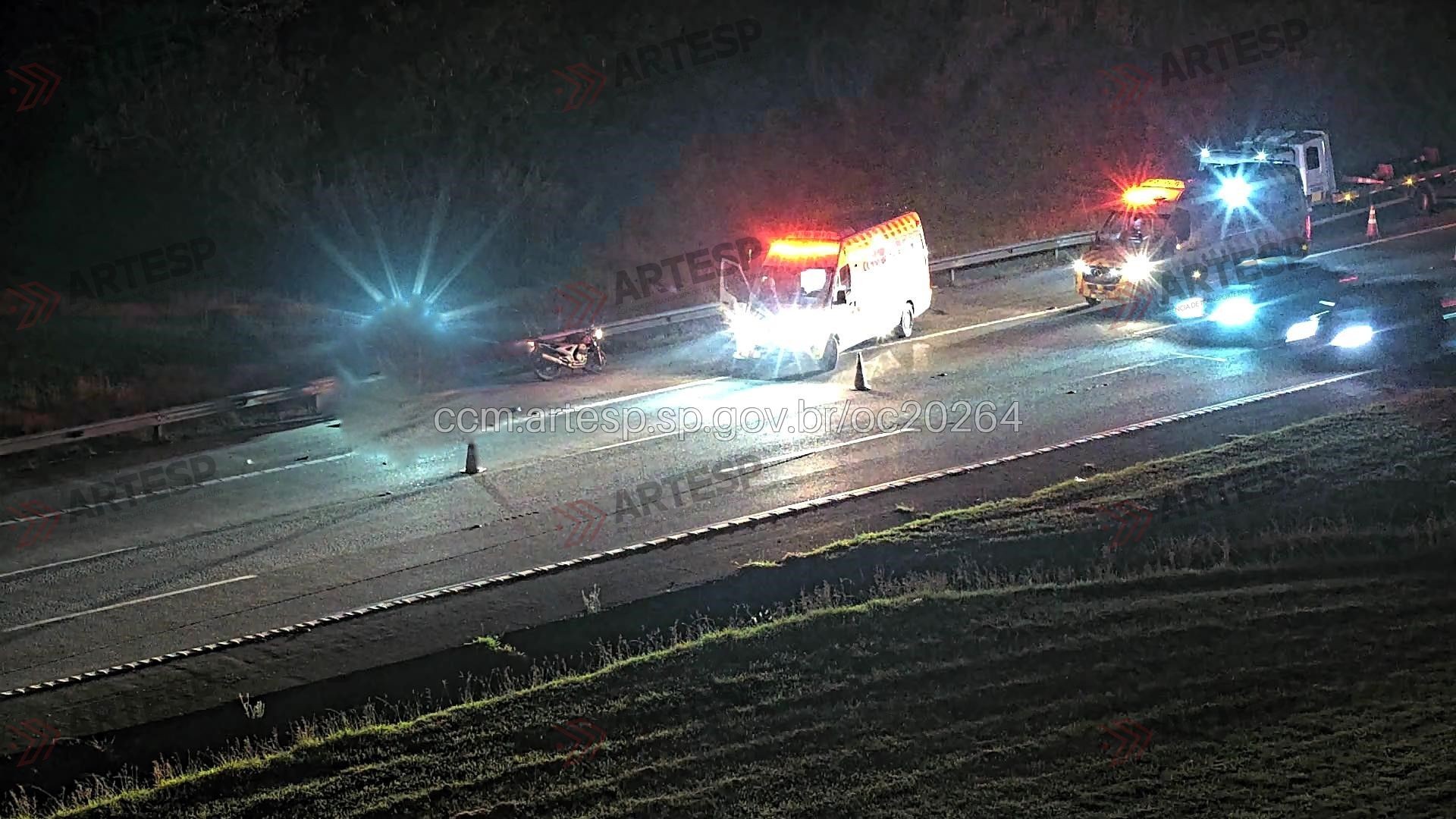
A motorcyclist died early Sunday morning, May 26th, after colliding with the rear of a semi-trailer truck on the Raposo Tavares Highway (SP-270) near kilometer 68 in Mairinque, São Paulo. The incident was reported by Artesp through the Sorocabana concessionaire's Operational Control Center (CCO). According to information gathered at the scene, the motorcycle was traveling in the third lane, heading from the capital towards the interior, when it struck the back of the truck for reasons yet to be determined, causing the motorcycle to overturn. The motorcyclist was pronounced dead at the scene. The truck driver sustained no injuries. The highway in this section has a dual carriageway with three lanes in each direction. Emergency services attended the scene for approximately two hours, including over an hour of road closure. Despite the closure, no traffic congestion was reported. The victim's body was removed by the funeral home at 2:35 AM. The semi-trailer truck was released by the Military Highway Police (PMRv) at 3:00 AM, and the motorcycle was subsequently removed by a tow truck. The causes of the accident are under investigation.
This tragic incident highlights the inherent risks associated with motorcycle operation, particularly on high-speed roadways where interactions with larger vehicles can have severe consequences. The investigation into the cause will be crucial in determining contributing factors, which could range from driver error and road conditions to vehicle maintenance or even potential infrastructure issues. Understanding the dynamics of such collisions is vital for developing targeted safety interventions, such as enhanced visibility measures for motorcycles, improved lane discipline enforcement, and potentially advanced driver-assistance systems for both vehicle types. Future road safety strategies should consider the complex interplay of human factors, technological advancements, and environmental conditions to mitigate such preventable fatalities.
AI-generated to prompt reflection — not editorial opinion, not advice, not a statement of fact. How this works.