Motorcyclist Dies in Three-Vehicle Collision in Jundiaí
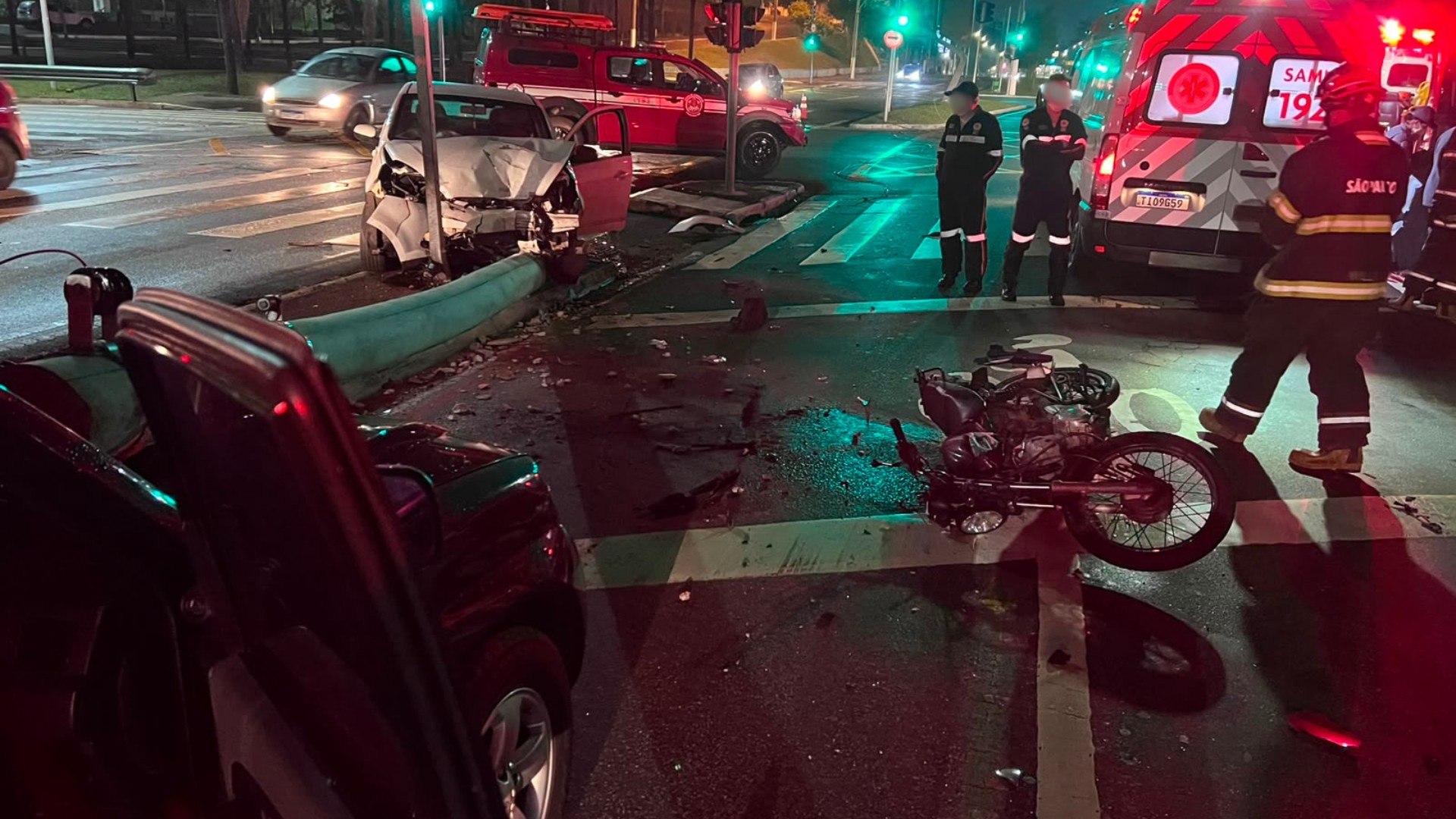
A motorcyclist died early Saturday morning, May 25th, in Jundiaí, São Paulo, after a collision involving three vehicles at the intersection of Nove de Julho and Prefeito Luiz Latorre avenues. According to police, the motorcyclist was traveling on Nove de Julho avenue towards Paço Municipal when they collided with a car heading towards the city center. The impact caused the car to strike a utility pole, which then fell onto a third vehicle. The driver of the car involved in the initial collision reportedly refused to take a breathalyzer test. Traffic in the area was disrupted during the rescue operations, and the exact causes of the accident are under investigation.
This incident follows two other significant traffic accidents in Jundiaí within a 48-hour period. On Friday morning, May 24th, a driver lost control of their vehicle on Avenida Jundiaí, crashing into a bridge and leaving the car suspended. Fortunately, no injuries were reported in this case, though structural damage occurred. Security footage captured the moment the driver hit another car before speeding towards the bridge railing. Both drivers in this incident allegedly declined medical attention and refused breathalyzer tests. Another accident on Avenida Jundiaí, in the Anhangabaú neighborhood, involved two cars and led to the arrest of one driver for driving under the influence. Police observed visible signs of intoxication, and the driver refused an alcohol test, subsequently being taken to the police station and arrested. The driver of the other vehicle tested negative for alcohol.
This series of accidents highlights critical issues in urban traffic safety, particularly concerning impaired driving and intersection design. The repeated refusals of breathalyzer tests suggest a potential systemic challenge in enforcing sobriety laws, possibly due to legal loopholes or inadequate enforcement mechanisms. The physical consequences of these collisions, including a fallen utility pole and a vehicle suspended from a bridge, underscore the need for infrastructure resilience and immediate traffic calming measures. Examining the temporal clustering of these events may reveal underlying factors such as increased traffic volume during specific periods, insufficient road maintenance, or a need for enhanced public awareness campaigns regarding responsible driving, especially in light of the increasing prevalence of AI-driven traffic management systems which rely on accurate real-time data and predictable driver behavior.
AI-generated to prompt reflection — not editorial opinion, not advice, not a statement of fact. How this works.