Motorcyclist Thrown After Colliding with Car in São José dos Campos
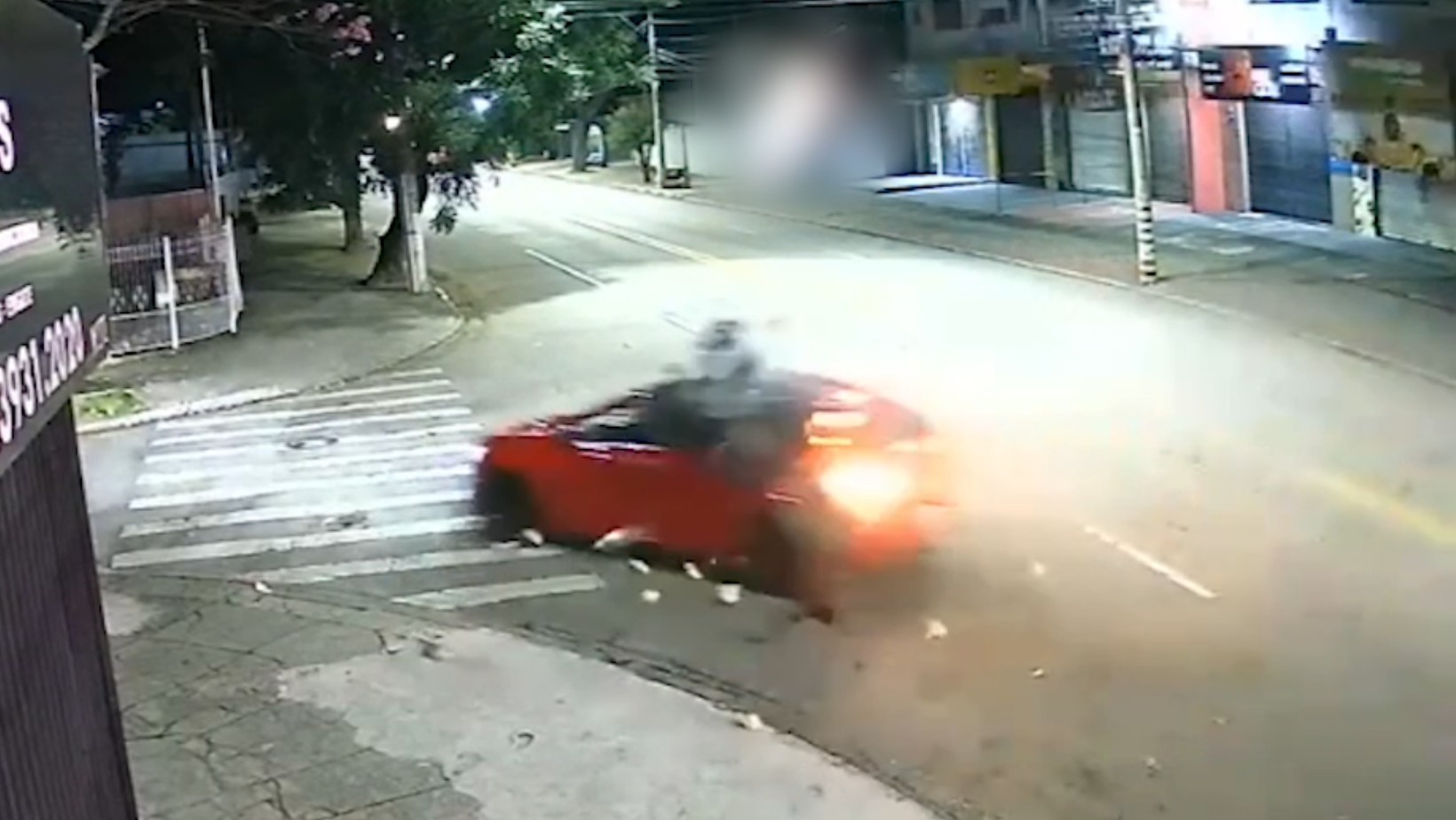
A security camera captured the moment a motorcyclist was thrown from their vehicle after colliding with a car in São José dos Campos, São Paulo, Brazil. The incident occurred around 8:50 PM on Thursday, October 2nd, on Avenida Cassiopeia in the Jardim Satélite neighborhood. According to the police report, the car driver was turning left when the motorcycle struck the rear left side of the car. Security footage and the driver's statement suggest the motorcyclist was attempting to overtake the car in a no-passing zone. The impact caused the motorcyclist to be thrown to the ground, sustaining serious injuries including a suspected fracture and head injury. Emergency medical services (Samu) transported the motorcyclist to the Vila Industrial Emergency Room. Their current health status is unknown. Further investigation revealed the motorcycle's registration was expired, leading to its seizure. Additionally, the motorcyclist was found to be without a valid license to operate a motorcycle. The car driver remained at the scene, called for assistance, and cooperated with the victim's treatment. Police reported the driver showed no signs of intoxication, had regular documentation, and only sustained material damage to their vehicle. The case has been registered as negligent bodily injury while operating a motor vehicle and will be investigated by the 7th District Police Station of São José dos Campos.
This incident highlights the critical interplay between traffic infrastructure, regulatory enforcement, and individual driver behavior. The reported circumstances, including an illegal overtaking attempt in a prohibited zone and the motorcyclist's lack of a license and expired vehicle registration, point to systemic issues in road safety education and enforcement. The car driver's adherence to traffic laws and immediate assistance to the injured party contrasts with the motorcyclist's apparent violations. Future considerations for urban planning and traffic management could involve enhanced visibility of traffic regulations, targeted campaigns on safe riding practices, and more robust mechanisms for verifying driver and vehicle compliance to mitigate such high-risk events and promote a safer traffic environment for all road users.
AI-generated to prompt reflection — not editorial opinion, not advice, not a statement of fact. How this works.