Mount Etna Erupts, Spewing Largest Ash Clouds Over Sicily in Years
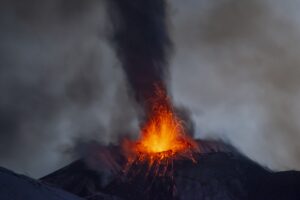
Mount Etna, located on the Italian island of Sicily, has reactivated and erupted, releasing lava and the largest ash clouds observed over the island in recent years. According to local media reports cited by Euronews, the volcanic activity stems from a fissure that opened on June 26th within the Voragine crater, situated at the volcano's summit. The eruption has generated significant ash plumes, impacting the surrounding region. This event marks a notable resurgence in Etna's activity, drawing attention to the geological dynamics of one of Europe's most active volcanoes. Further details on the extent of the ash dispersal and any potential impacts on local communities and air travel are being monitored. The ongoing activity underscores the dynamic nature of volcanic systems and their capacity for dramatic displays of geological force. Residents and authorities are observing the situation closely as the eruption continues.
The eruption of Mount Etna highlights the inherent geological forces shaping the Sicilian landscape. While volcanic activity is a natural phenomenon, its scale and impact, such as the significant ash clouds, necessitate ongoing monitoring and preparedness from regional authorities. Understanding the frequency and intensity of such events is crucial for long-term risk assessment and infrastructure planning in seismically active zones. Future technological advancements in early warning systems and predictive modeling could further enhance safety measures, allowing for more effective mitigation strategies against potential disruptions to daily life and economic activities. The event serves as a reminder of the powerful natural systems that coexist with human settlements.
AI-generated to prompt reflection — not editorial opinion, not advice, not a statement of fact. How this works.