Mozambique's Finance Minister Discusses Economic Recovery with Paris Club Co-Chair
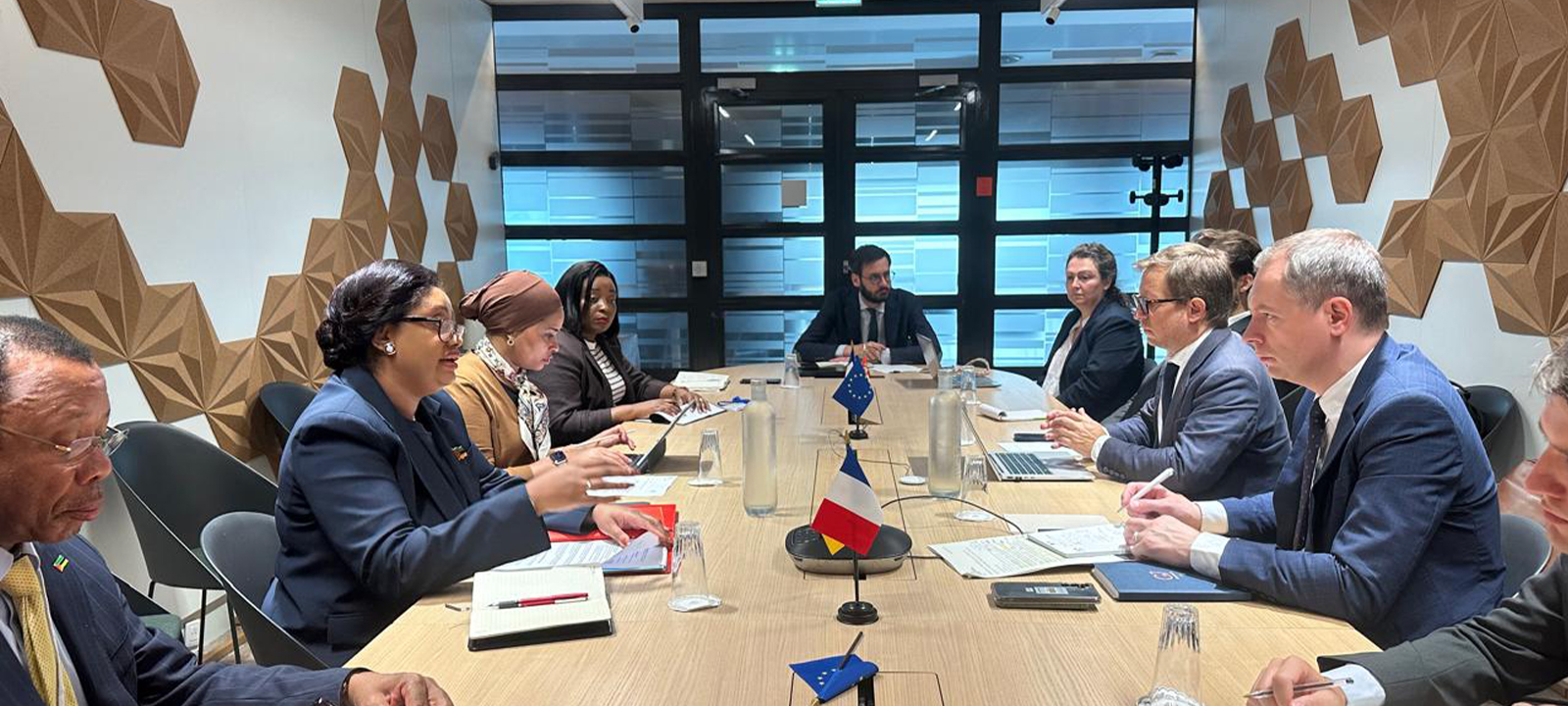
Mozambique's Finance Minister, Carla Louveira, met with Thomas Revial, Co-Chair of the Paris Club, on June 22nd to review the nation's economic situation and recovery prospects. Minister Louveira reported positive signs of economic recovery in early 2023, with growth reaching 5.5%, partly due to the commencement of liquefied natural gas (LNG) production in Area 4 via the Coral Sul project. This recovery followed significant shocks from the COVID-19 pandemic and extreme climate events. However, the country faced a political crisis in the final quarter of 2024 following the October 9th presidential elections. This crisis involved protests, leading to partial economic paralysis, destruction of infrastructure, looting, and disruptions to transportation. Consequently, the Gross Domestic Product (GDP) contracted by 4.9% in Q4 2024, with annual growth settling at 2.15%. By 2025, the economy showed renewed recovery across quarters, achieving approximately 5.1% growth in the fourth quarter, primarily driven by the primary sector, including mining, fishing, and agriculture. Projections for the 2026 Economic and Social Plan and State Budget (PESOE) anticipate moderate GDP growth of 2.8%, supported by exchange rate stability, inflation around 3.7%, and net international reserves of $3.234 billion, covering about 4.4 months of imports. The Minister also highlighted government reforms, including Mozambique's exit from the Grey List, the operationalization of the Sovereign Fund, the approval of the Mozambique Development Bank (BDM), and the implementation of the Public Debt Strategy Operational Plan for 2025-2029. Mr. Revial expressed confidence in Mozambique's economic stabilization, noting that gas revenues from the Rovuma Basin could significantly boost future growth. Despite positive indicators, the government acknowledges ongoing fiscal and macroeconomic risks that could impact the PESOE 2026 targets and the current fiscal adjustment process.
Mozambique's economic narrative presents a complex interplay between resource potential, external shocks, and domestic political stability. The reliance on natural gas production for growth highlights a common development model, yet also signals potential vulnerability to commodity price fluctuations and global energy market dynamics. The impact of political instability on economic activity, as seen in late 2024, underscores the critical need for robust governance and predictable institutional frameworks to attract and sustain investment. While reforms and fiscal management are progressing, the acknowledgment of ongoing risks suggests that securing long-term, diversified economic resilience will require continuous adaptation and strategic planning beyond immediate recovery efforts. The interplay between sovereign wealth fund allocations and external market investments will be a key indicator of future financial prudence and growth sustainability.
AI-generated to prompt reflection — not editorial opinion, not advice, not a statement of fact. How this works.