MP Criticizes Government Appointments to Key Bodies, Citing Democratic Deficit
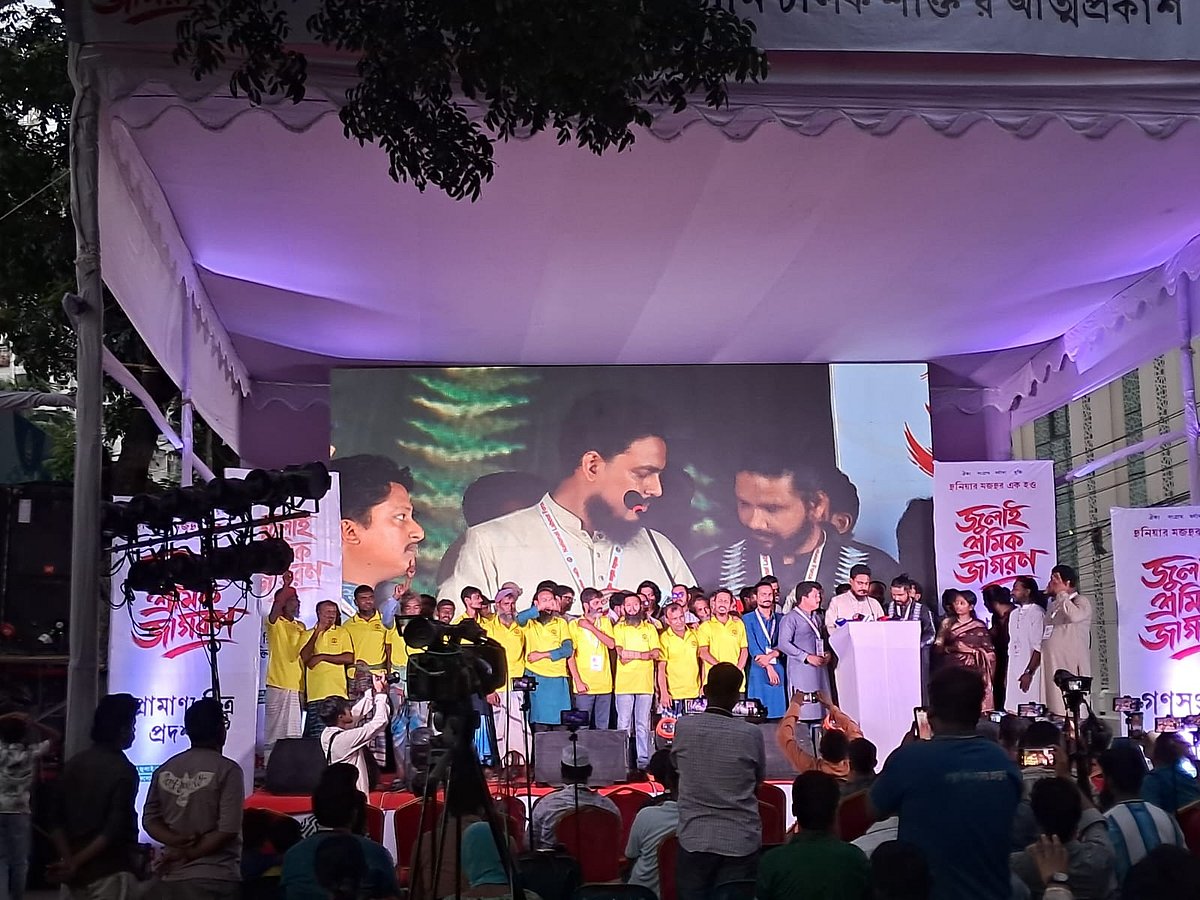
Akhtar Hossain, a Member of Parliament and Secretary-General of the National Citizen Party (NCP), has strongly criticized the government's appointment of individuals with party affiliations to twelve significant state organizations, boards, and corporations. Among these appointments is the Director-General of the Bangladesh Labour Welfare Foundation. Hossain described these actions as 'unfortunate,' stating that filling positions requiring transparent selection with party loyalists undermines democracy in the country. He made these remarks on Saturday afternoon at an event in Dhaka, organized by the NCP's labor wing, the National Labour Force, under the theme 'July Labour Awakening.'
Hossain also condemned the practice of appointing ruling party members as administrators in local government bodies, from city corporations down to unions, in lieu of local elections. He argued that this demonstrates a pattern of seizing control of all sectors through partisan appointments. He drew a parallel to the July mass uprising, recalling how rickshaw pullers' slogans inspired him, yet lamented that the basic civic rights and human dignity of the working class remain unaddressed. He asserted that progress for any segment of society is impossible without a functioning democratic system for the entire nation, and that institutions vital for democratic governance are being deliberately weakened. He highlighted that the current government has failed to implement the mandate of a previous referendum since coming to power.
During the event, Abdul Hannan Masud, NCP's Senior Joint Chief Coordinator and MP, called for the arrest of the outgoing President, Md. Shahabuddin, who resigned on Friday. Masud criticized the government for allowing the President to resign and address parliament rather than impeaching him, suggesting that his arrest would be an act of atonement. He urged the government to govern according to the aspirations of the July uprising, accusing them of dismantling democratic principles and installing partisan administrators to facilitate corruption. Abdullah Al Amin, NCP's Joint Secretary-General and MP, acknowledged the contribution of rickshaw and van pullers to the July uprising, noting their bravery in transporting injured individuals to hospitals. He stressed the state's responsibility to ensure a dignified life for those who contributed to the nation's democratic transition. The event also saw the announcement of a new organization, the National Rickshaw-Van Driver Force, which will operate as an affiliate of the National Labour Force under the NCP.
The critique leveled against the government's appointment practices highlights a systemic tension between political expediency and democratic governance. By placing party loyalists in key institutional roles, the government may prioritize immediate political control and patronage over meritocracy and institutional independence. This approach, while potentially consolidating power in the short term, risks eroding public trust and the long-term effectiveness of these organizations. The analysis suggests that such practices can create a feedback loop where partisan influence compromises the very functions these bodies are meant to serve, potentially hindering equitable development and citizen welfare. Looking ahead, the sustainability of governance models that rely heavily on political appointments over institutional strengthening remains a critical question in the evolving landscape of public administration and democratic accountability.
AI-generated to prompt reflection — not editorial opinion, not advice, not a statement of fact. How this works.