MP Mardia Momtaz Criticizes Government's Stance on July Accord
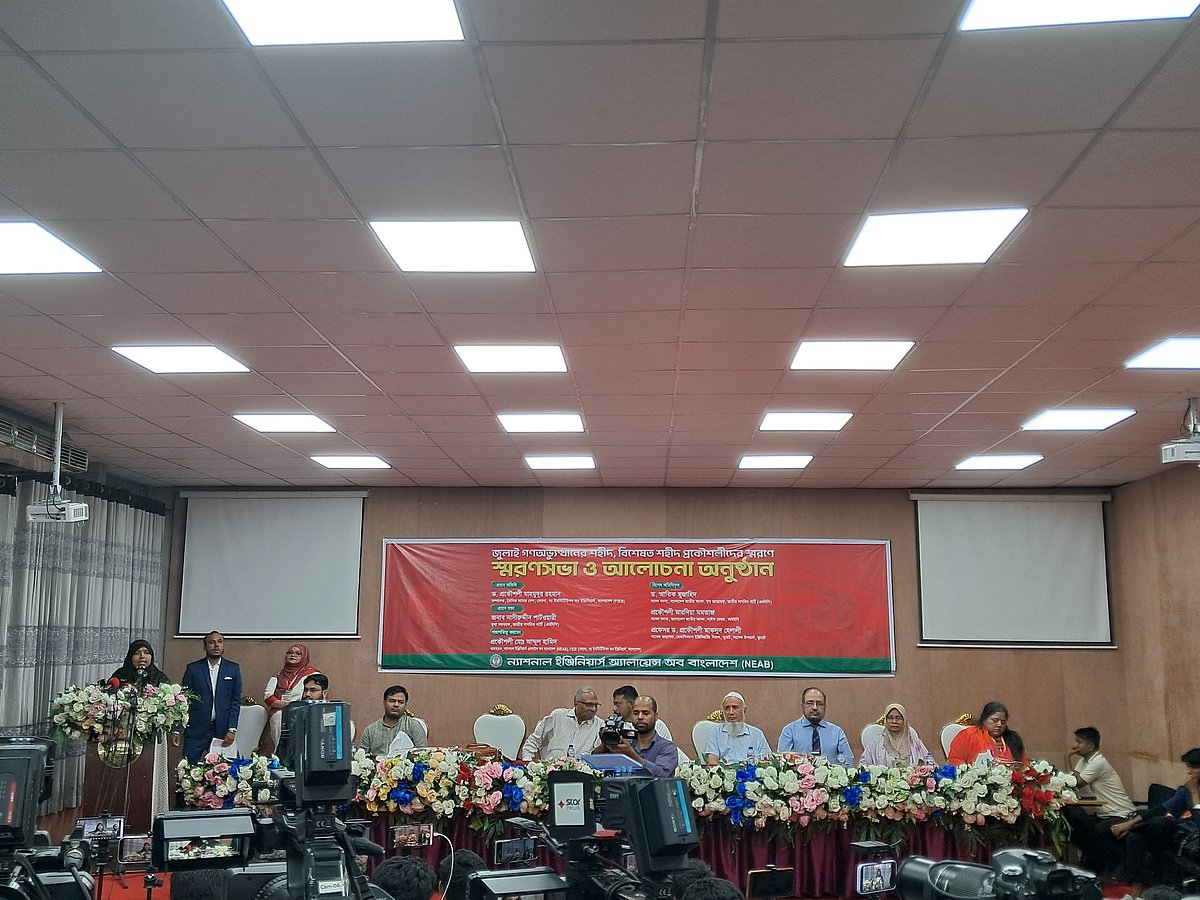
Reserved seat Member of Parliament (MP) Mardia Momtaz has voiced strong disapproval of the government's position on the July Accord, deeming it "undesirable" and detrimental to the nation. Speaking at a memorial event in Dhaka on Thursday evening, Momtaz expressed disappointment with the current government, stating that her party had not anticipated such a stance. The event, organized by the National Engineers Alliance of Bangladesh (NEAB), an affiliate of the National Citizen Party (NCP), commemorated the martyrs of the "July Uprising," with a particular focus on engineers. Momtaz controversially described the customary moment of silence as "unnecessary," arguing that prolonged silence has been the norm, and that the culture of speaking, which began in 2024, should be maintained. She characterized silence as the "language of fascists" and declared her intention to speak out. Momtaz also criticized some MPs, seemingly from the ruling party, for blindly following the Chief Whip's directives and voting along party lines without independent thought. She highlighted the perceived irony of having no educational qualification requirements for lawmakers, while minimum educational standards are imposed for local government elections. Reflecting on parliamentary proceedings, Momtaz found it "extremely humiliating" that bills are sometimes presented just 20 minutes before a vote, making it impossible for MPs to properly scrutinize them. She emphasized that the procedural correctness of presenting legislation is more crucial than the bill's content itself. The event featured Daily Amar Desh Editor Mahmudur Rahman as the chief guest and NCP Chief Coordinator Nasiruddin Patwari as the main speaker. NEAB Convener Md. Abdul Hamid presided over the event, with other speakers including NCP MP Atiq Mozahid and former KUET Vice-Chancellor Maksud Helali.
MP Mardia Momtaz's critique highlights a systemic tension between legislative procedure and political expediency. Her call to abandon silence in favor of vocal dissent, even when facing a government perceived as unresponsive, reflects a broader challenge in democratic governance: balancing party discipline with substantive debate. The disparity in educational requirements for different levels of public office raises questions about the qualifications deemed necessary for effective lawmaking, potentially impacting the quality of legislation and public trust. The MP's emphasis on procedural integrity over hasty bill passage points to a potential governance deficit where the mechanics of democracy may be overshadowed by the pursuit of expedited outcomes. This situation prompts consideration of how institutional frameworks can better support informed deliberation and prevent the erosion of legislative scrutiny in the face of political pressures.
AI-generated to prompt reflection — not editorial opinion, not advice, not a statement of fact. How this works.