MP Sharma Urges Government to Address Diplomatic and Economic Crises Seriously
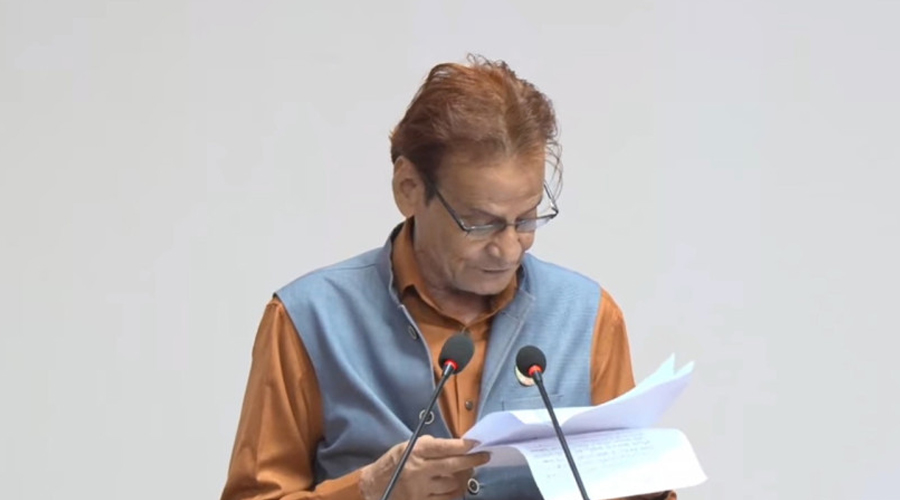
Yuvraj Sharma, a Member of the National Assembly representing the Nepali Congress party, has expressed strong disapproval of the current government's performance. Speaking during a special session of the National Assembly on Monday, August 2nd (18th of Shrawan), Sharma accused the government of prioritizing superficial popularity and spreading misinformation instead of addressing issues of public concern. He specifically condemned the government's alleged disregard for legal processes and its increasing reliance on populism. Sharma argued that these actions are detrimental to the nation's progress and well-being. He called for a more serious and responsible approach from the government to navigate the country's diplomatic and economic challenges. The MP emphasized the need for substantive policy decisions rather than symbolic gestures. He believes that the government's current trajectory is unsustainable and could lead to further complications. Sharma's remarks highlight a significant political divide and growing public dissatisfaction with the administration's priorities and methods.
The statement by MP Sharma criticizes the government's focus on "cheap popularity" and "spreading misinformation" over substantive public issues, alongside alleged legal process violations and rising "populism." This critique points to a potential governance challenge where short-term political gains might be prioritized over long-term national stability and effective policy implementation. In the context of the evolving digital information landscape and increasing global interconnectedness, governments face a dual imperative: to maintain public trust through transparency and adherence to legal frameworks, while also navigating complex diplomatic and economic pressures. The tension between populist appeals and evidence-based governance is a recurring theme, with potential long-term implications for democratic institutions and economic resilience. Future governance models will likely require a stronger emphasis on data-driven policy, robust legal oversight, and transparent communication to counteract misinformation and build sustainable public support.
AI-generated to prompt reflection — not editorial opinion, not advice, not a statement of fact. How this works.
