MP Warns Government Dignity Tied to Parliamentarians' Self-Respect
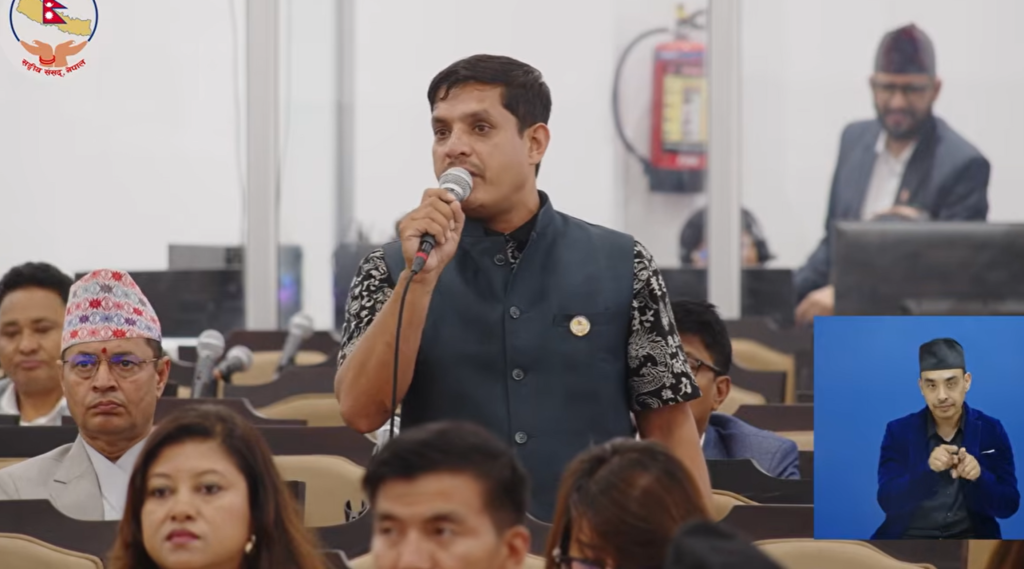
Jagdish Kharel, a Member of Parliament from the Rastriya Swatantra Party representing Dolakha, has stated that the government and parliament must operate in a manner that preserves dignity. Speaking in the House of Representatives on Monday, Kharel emphasized that if the dignity of the parliamentarians within the esteemed House is compromised, and their self-respect is wounded, then the dignity of the House itself will not endure. He suggested that the government's continued existence should not solely rely on the Prime Minister's dignity, but also on the respect afforded to the members of parliament. The implication is that a lack of respect for elected officials could undermine the legitimacy and standing of the entire legislative body and, by extension, the government it supports. Kharel's remarks highlight a concern for the standing of individual lawmakers within the political system and their role in maintaining the overall integrity of democratic institutions. The statement suggests a potential disconnect between the executive and legislative branches or a perceived disregard for the contributions and positions of MPs.
This statement highlights a potential governance challenge where the perceived respect for individual parliamentarians is framed as a prerequisite for the legitimacy of the entire legislative body and the government. From a systems perspective, the incentive structures within a parliamentary democracy typically aim to balance the authority of the executive with the oversight and representation functions of the legislature. When MPs feel their dignity and self-respect are undermined, it can signal broader issues in political communication, inter-branch relations, or the distribution of power and influence. Addressing such concerns is crucial for maintaining public trust and ensuring the effective functioning of democratic institutions, particularly as societies increasingly scrutinize the conduct and efficacy of their governance structures in the digital age.
AI-generated to prompt reflection — not editorial opinion, not advice, not a statement of fact. How this works.