MPB4 and Petrobras Symphony Orchestra Release "MPB4 Sinfônico" Album
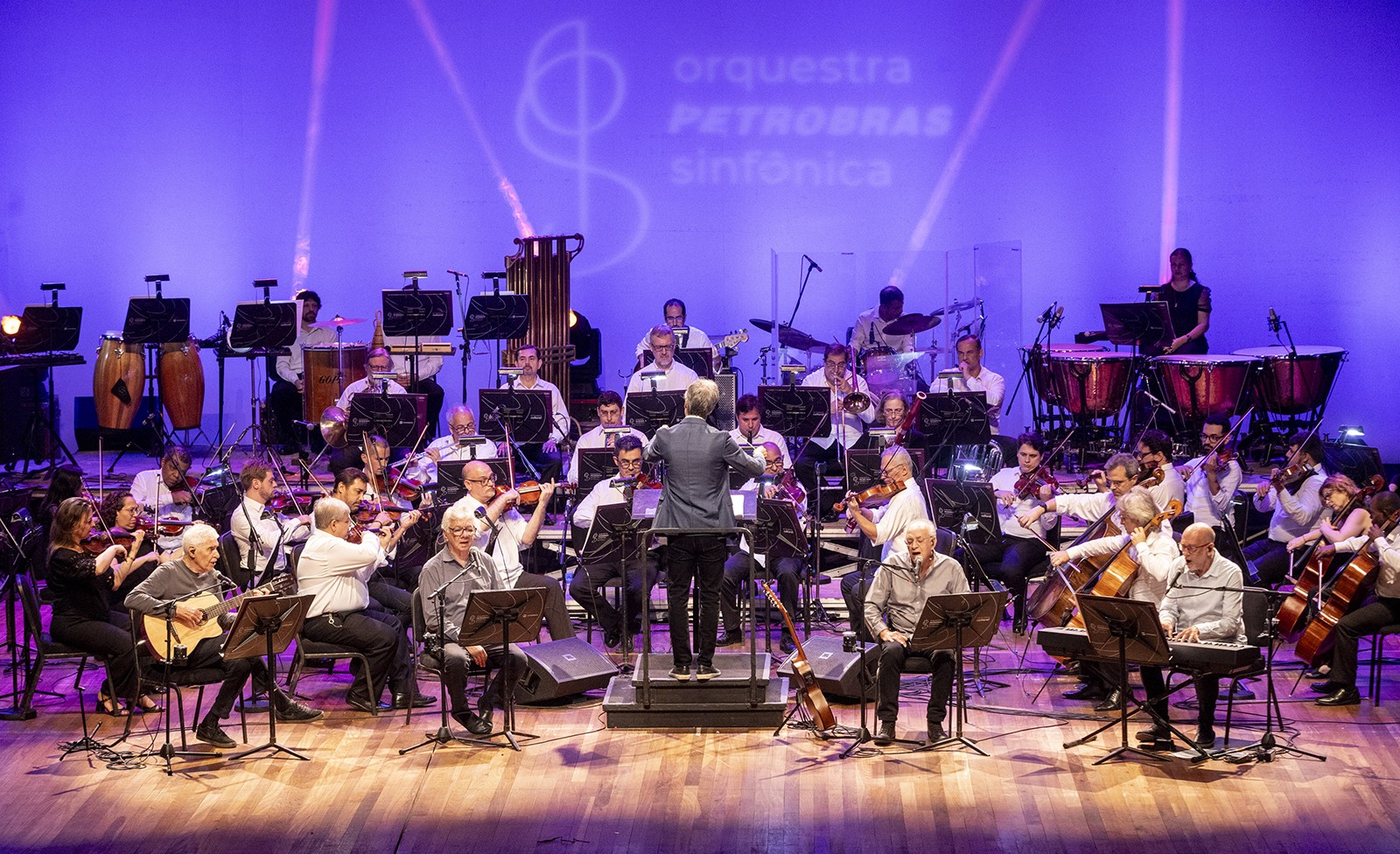
The Brazilian vocal group MPB4 has released a new album titled "MPB4 Sinfônico," featuring a collaboration with the Petrobras Symphony Orchestra. This album, digitally available since July 31, 2025, captures a concert performance from October 2024 and was recorded in early 2025 at the orchestra's rehearsal space in Rio de Janeiro. The project celebrates MPB4's 60th anniversary, having formed in 1962 and turned professional in 1964. The album comprises 14 songs that showcase the group's historically engaged musical trajectory and their significant contributions to Brazilian Popular Music (MPB).
Notably, six of the 14 tracks are compositions by Chico Buarque, whose career was closely linked with MPB4 until the mid-1970s. The album includes reinterpretations of classics like "Cálice" (1973), a collaboration between Chico Buarque and Gilberto Gil, and "Angélica" (1977) by Miltinho and Chico Buarque. The arrangements were crafted by a team including pianist Itamar Assiere, Gilson Santos, Jaime Alem, and Paulo Malaguti Pauleira, with the orchestra conducted by Maestro Felipe Prazeres. While the source material acknowledges that previous recordings by MPB4 might be considered definitive, the album is praised for its rich arrangements, adding new dimensions to songs like Dori Caymmi's "Porto" (1975) and Milton Nascimento's "Notícias do Brasil (Os pássaros trazem)" (1981). Other featured tracks include "Última forma" (1972), "Cicatrizes" (1972), "O ronco da cuíca" (1975), "Velas içadas" (1979), and works by Antonio Carlos Jobim, concluding with Chico Buarque's "Roda viva" (1967), a piece whose original arrangement was created by the late Magro, a key member of MPB4.
This album represents a confluence of established Brazilian popular music heritage and institutional support, potentially offering a new platform for MPB4's legacy. The integration with the Petrobras Symphony Orchestra suggests a strategic effort to elevate the group's work through symphonic arrangements, possibly aiming to broaden its appeal across different demographics and musical tastes. Such collaborations can serve to recontextualize classic songs, highlighting their compositional depth and enduring relevance in a contemporary orchestral setting. From a systemic perspective, this project may reflect a broader trend of cultural institutions partnering with legacy artists to preserve and promote national musical heritage, while also providing a significant artistic outlet and visibility for the orchestra itself. The success of such endeavors often hinges on the delicate balance between honoring the original artistic intent and innovating through new sonic textures and interpretations, offering a valuable case study in artistic preservation and evolution.
AI-generated to prompt reflection — not editorial opinion, not advice, not a statement of fact. How this works.