MQM-P Revives Push for New Provinces, Citing Governance Failures
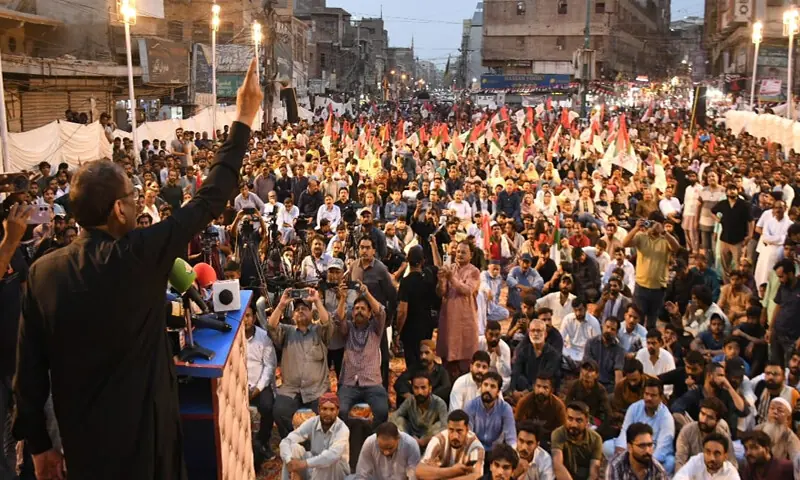
The Muttahida Qaumi Movement-Pakistan (MQM-P) has intensified its campaign for the creation of new provinces, arguing that the current administrative system is inadequate for Pakistan's growing population and development needs. Party chairman Khalid Maqbool Siddiqui stated in a Hyderabad rally that the demand for a new province carved from Sindh remains active, emphasizing it would be based on "mother tongue" and "exchanged land." He highlighted historical migration patterns and criticized the existing urban-rural divide in Sindh's governance, asserting that urban areas contribute significantly to the provincial budget with minimal returns. Siddiqui pointed out that 97% of Sindh's budget originates from cities like Karachi and Hyderabad, while other regions contribute little, creating an imbalance in resource allocation.
Concurrently, senior MQM-P leader Mustafa Kamal held a press conference in Karachi, echoing the call for new provinces based on administrative necessity rather than ethnicity. Kamal argued that the increasing population and urbanization necessitate a more responsive governance structure. He criticized the Sindh government for allegedly mismanaging funds, stating that Karachi, despite generating over 90% of provincial revenue, received a disproportionately small allocation. Kamal also accused the government of centralizing power and weakening local governments, preventing effective service delivery. The MQM-P plans to take its campaign to the streets after legislative efforts to reform governance and empower local bodies were reportedly blocked.
The MQM-P's renewed push for new provinces highlights persistent governance challenges in Pakistan, particularly concerning resource allocation and service delivery in densely populated urban centers like Karachi. The party's arguments center on administrative efficiency and equitable distribution, framing the demand as a response to systemic failures rather than ethnic division. This strategy seeks to leverage public dissatisfaction with current governance structures, especially in light of perceived underdevelopment and financial disparities. The internal divergence between party leaders on event participation suggests potential strategic or tactical disagreements within MQM-P regarding public engagement and messaging. Looking ahead, the success of such demands will likely depend on broader political consensus and the ability to demonstrate tangible benefits of administrative restructuring, especially in the context of national economic pressures and evolving federal-provincial dynamics.
AI-generated to prompt reflection — not editorial opinion, not advice, not a statement of fact. How this works.