MQM-P threatens protests over unfulfilled 2022 agreement with PPP
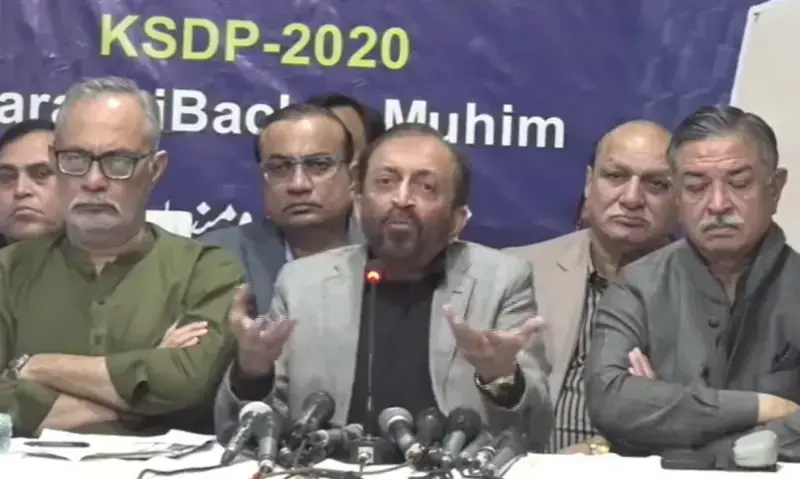
The Muttahida Qaumi Movement-Pakistan (MQM-P) has issued a stern warning of protest if the federal government fails to ensure the implementation of an 18-point agreement signed with the Pakistan Peoples Party (PPP) on March 30, 2022. This pact, signed just before the two parties joined a coalition to oust then-Prime Minister Imran Khan, covered critical provincial issues including municipal governance, power-sharing, recruitment policies, and the local policing system in Sindh. MQM-P leader Farooq Sattar described the agreement as the "last agreement" between the parties and emphasized that his party sought neither inclusion in the provincial government nor control over Sindh's resources. Sattar stated that despite repeated reminders, PPP Chairman Bilawal Bhutto-Zardari has not met to discuss the agreement's implementation, particularly regarding a Supreme Court order on local governments. He asserted that none of the 18 points have been implemented, including the Supreme Court directive. Sattar highlighted that Prime Minister Shehbaz Sharif, Maulana Fazlur Rehman, Akhtar Mengal, and Khalid Hussain Magsi had signed the agreement as witnesses, urging the federal government and Prime Minister Sharif, whom he called the "guarantor," to intervene and ensure the pact's fulfillment. He warned that if the agreement is not implemented, the MQM-P would initiate a protest movement that would be difficult to contain. Sattar called on the Prime Minister to visit Karachi and resolve the issues before public frustration leads to widespread street protests. He also mentioned that the federal government should not obstruct any planned public demonstrations. Sattar specifically invoked Article 149 of the Constitution, suggesting the federal government could issue directives to provinces. He also called for the abolishment of the quota system and noted the unimplemented 60:40 rural/urban Sindh parity. Sattar added that if Bilawal fails to act, President Asif Ali Zardari or Prime Minister Sharif must get involved, especially regarding the formation of a joint commission on fake domiciles.
The MQM-P's ultimatum to the federal government highlights a persistent tension between coalition partners and the practical challenges of implementing complex inter-party agreements. The party's threat of protest underscores a potential breakdown in political trust, signaling a strategic move to leverage public sentiment and pressure the ruling coalition. The invocation of constitutional provisions and the framing of the Prime Minister as a "guarantor" suggest an attempt to elevate the dispute beyond bilateral disagreements to a matter of federal responsibility and constitutional adherence. This situation reflects broader governance challenges in Pakistan, where the effective devolution of power and resource allocation to local bodies, as stipulated in agreements and court orders, remains a contentious issue, potentially impacting urban development and public service delivery in major cities like Karachi.
AI-generated to prompt reflection — not editorial opinion, not advice, not a statement of fact. How this works.