Mujtaba Khamenei's Continued Absence Raises Questions About Iran's Leadership
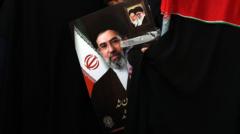
Mujtaba Khamenei, reportedly the new Supreme Leader of Iran, has remained absent from public view for over four months since assuming his father's position. Despite the circulation of letters attributed to him, there have been no public appearances, images, or audio recordings released. This prolonged absence has led to discussions about its potential religious and political implications. Some observers are drawing parallels between Khamenei's "occultation" and the concept of the hidden Imam in Shia Islam, as well as the absences of prophets. The lack of public engagement raises significant questions about the nature of his leadership and the transparency of the Iranian political system. The situation highlights the challenges in verifying information and understanding the true dynamics of power within the Islamic Republic. The continuous absence, coupled with the religious interpretations being circulated, suggests a deliberate strategy to cultivate an aura of mystery or divine mandate around the new leader. However, it also creates uncertainty and potential instability regarding succession and governance.
The prolonged public absence of Mujtaba Khamenei, ostensibly the new Supreme Leader of Iran, presents a unique governance challenge. By drawing parallels to religious concepts of hiddenness, the regime may be attempting to legitimize his authority and cultivate a sense of divine appointment. This strategy, while potentially reinforcing ideological control among certain segments of the population, risks creating a leadership vacuum in practical terms. In an era demanding transparency and responsiveness, such an opaque approach to succession and leadership could foster internal dissent and external skepticism. The long-term sustainability of a leadership shrouded in mystery, especially in the face of evolving geopolitical and technological landscapes, remains a significant question. This approach may inadvertently highlight systemic vulnerabilities related to succession planning and public legitimacy in the digital age.
AI-generated to prompt reflection — not editorial opinion, not advice, not a statement of fact. How this works.