Multan Villages Submerged by River Chenab Floods; Crops Damaged
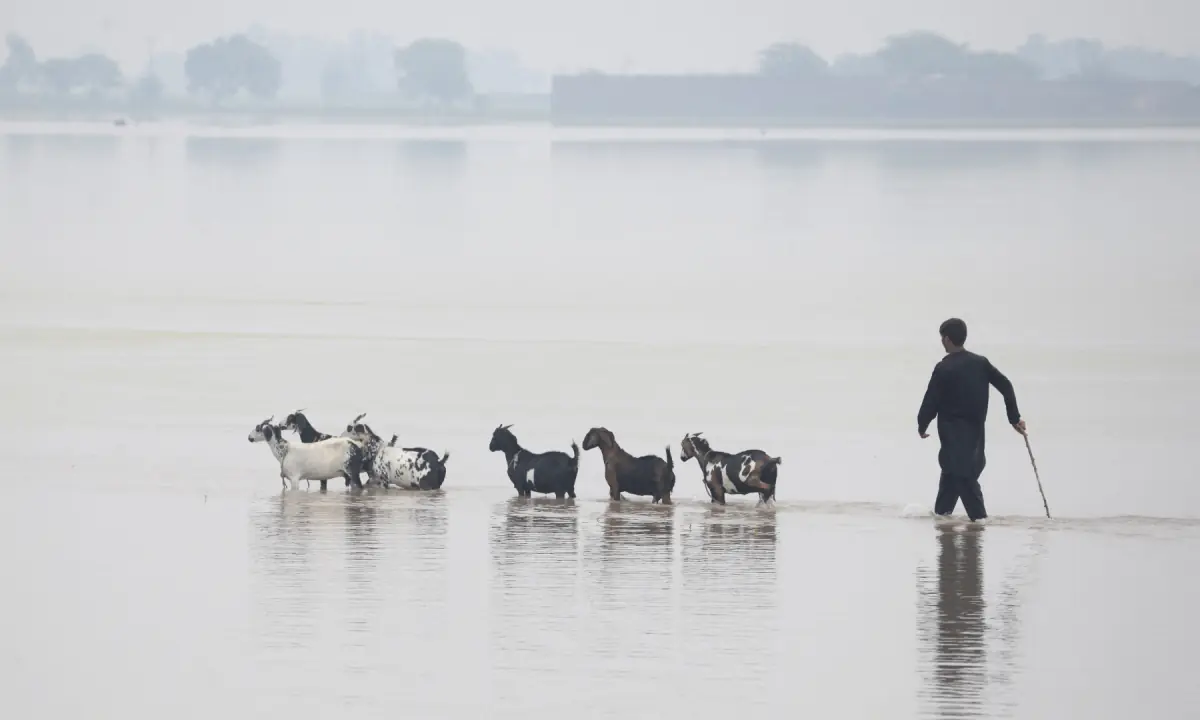
In Pakistan's Multan district, at least 22 villages, known as mouzas, have been partially inundated by three to four feet of floodwater from the River Chenab. This has forced thousands of residents to relocate to safer areas, while significant damage has occurred to standing crops. The district administration's report indicates that out of 545 mouzas, 138 are prone to flooding, with 22 now experiencing partial submersion across the Shujaabad, Jalalpur Pirwala, and Multan Saddar tehsils. Residents reported moving cattle to higher ground as cotton and fodder crops were submerged. While no villages were classified as severely affected and no formal evacuation orders were issued, the district administration is closely monitoring the situation as water levels begin to recede. Civil society activists noted that local flood defenses were washed away. The Deputy Commissioner of Multan, Dr. Faisal Saleem, stated that the flood wave had decreased but urged vigilance, advising residents to rely on official information and avoid rumors. Separately, the Provincial Disaster Management Authority (PDMA) reported low-level flooding on the Indus River at Kalabagh and Taunsa, with other major rivers flowing within normal limits. The PDMA also warned of potential flash floods due to forecasted rainfall in upper catchment areas and cautioned about possible urban flooding in several cities, including Multan, and landslides in hilly regions.
The recent flooding in Multan, Pakistan, highlights the recurring challenge of managing riverine flood risks in densely populated agricultural regions. While the immediate response focused on monitoring and advising residents, the inundation of villages and damage to crops underscore the vulnerability of communities situated in flood-prone areas. The effectiveness of local, self-constructed flood defenses against substantial water flows suggests a need for integrated, government-supported infrastructure planning. Looking ahead, the interplay between monsoon patterns, climate change-induced extreme weather events, and existing land-use policies will be critical. A proactive approach, incorporating advanced hydrological modeling and resilient infrastructure development, could mitigate future impacts and enhance community preparedness beyond reactive measures.
AI-generated to prompt reflection — not editorial opinion, not advice, not a statement of fact. How this works.