Myanmar Egg Prices Soar Due to Supply Chain Issues
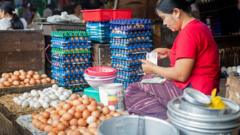
Egg prices in Myanmar have significantly increased, reaching up to 700 kyat per egg. This surge is attributed to a combination of factors impacting the supply chain. Import restrictions have limited the availability of essential goods, contributing to the overall price hike. Furthermore, the cost of chicken feed and veterinary medicines has risen substantially, increasing operational expenses for poultry farmers. The situation has been exacerbated by the closure of some chicken farms and a general decline in the overall supply of eggs in the market. These combined pressures have created a significant imbalance between demand and supply, leading to the current high prices.
The sharp rise in Myanmar's egg prices, driven by import restrictions, increased feed and medicine costs, and farm closures, highlights the fragility of supply chains in the region. These dynamics suggest that localized production and reduced reliance on imports could be strategic imperatives for stabilizing essential food prices. The government's role in managing import policies and supporting agricultural inputs will be critical in mitigating future price volatility and ensuring food security for the population. Understanding the interplay between global commodity prices, local currency fluctuations, and domestic agricultural policy is key to navigating these challenges.
AI-generated to prompt reflection — not editorial opinion, not advice, not a statement of fact. How this works.