Myanmar Junta Erasing Independence Hero Aung San's Memory
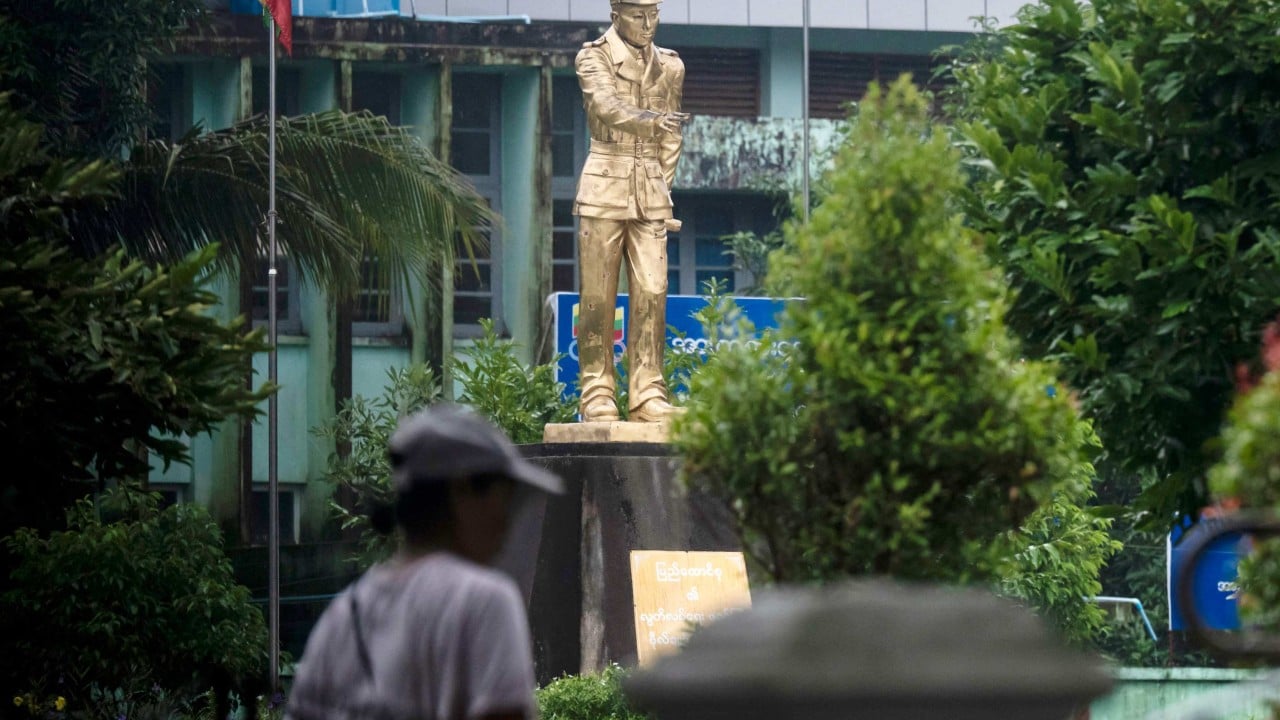
Myanmar's military-backed authorities are systematically removing statues of independence hero Aung San across the country. While officials cite "incorrect proportions and shapes" as the reason for the removals, analysts interpret this as a deliberate strategy to diminish Aung San's legacy and undermine the legitimacy of the ousted elected government. Aung San, revered as the nation's founding father, established the military, unified ethnic groups, and led the nationalist movement that achieved independence. His removal from public spaces is seen as an attempt to sever the connection between his historical significance and the current civilian leadership. This campaign targets not only physical representations but also the collective memory associated with Aung San's contributions to Myanmar's formation. The junta's actions signal a broader effort to reshape the national narrative in favor of military rule. The removal of these iconic statues represents a significant cultural and political maneuver by the current regime.
The removal of statues honoring Aung San in Myanmar appears to be a strategic effort by the ruling junta to reframe national identity and consolidate power. By targeting a figure central to the nation's founding narrative and military establishment, the junta aims to sever historical legitimacy from the overthrown civilian government and assert its own authority. This tactic leverages historical symbolism to influence present-day political discourse and potentially weaken opposition sentiment by altering the collective memory. The long-term implications involve a potential schism in national identity, as the military seeks to establish a narrative that prioritizes its own historical role over that of the civilian independence movement. This approach highlights the enduring power of historical symbols in political struggles and the risks associated with manipulating national heritage for contemporary political gain.
AI-generated to prompt reflection — not editorial opinion, not advice, not a statement of fact. How this works.