Myanmar Military Drills: A Boost for Russian Arms Sales?
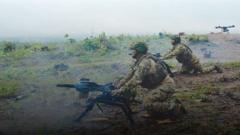
The TIGER-2026 military exercise, conducted by Myanmar's junta, is being viewed by observers as more than just a training drill. Analysts suggest the exercises extend beyond a simple camp takeover scenario. They believe the drills have broader implications, encompassing arms sales and geopolitical considerations. The involvement of Russia in supplying military hardware to Myanmar is a significant factor in this assessment. Observers are closely watching the extent to which these exercises serve to promote Russian weaponry and enhance bilateral defense ties. The geopolitical landscape surrounding Myanmar and its military relationships is a key area of focus for international observers.
The TIGER-2026 military exercises present a complex interplay of domestic security objectives and international arms trade dynamics. From a geopolitical perspective, the drills may serve as a platform to showcase and potentially increase the procurement of Russian military equipment by Myanmar's junta. This aligns with broader trends of deepening strategic partnerships between Russia and certain nations seeking to diversify their defense suppliers. The exercises could be analyzed through the lens of incentive structures, where Myanmar's regime seeks to bolster its military capabilities and international standing, while Russia aims to secure and expand its defense export markets. Future developments will likely depend on the evolving geopolitical alignments and the efficacy of these military exchanges in meeting the stated and unstated objectives of both nations.
AI-generated to prompt reflection — not editorial opinion, not advice, not a statement of fact. How this works.