Myanmar's Detained Former Leader Aung San Suu Kyi Meets Red Cross Representative
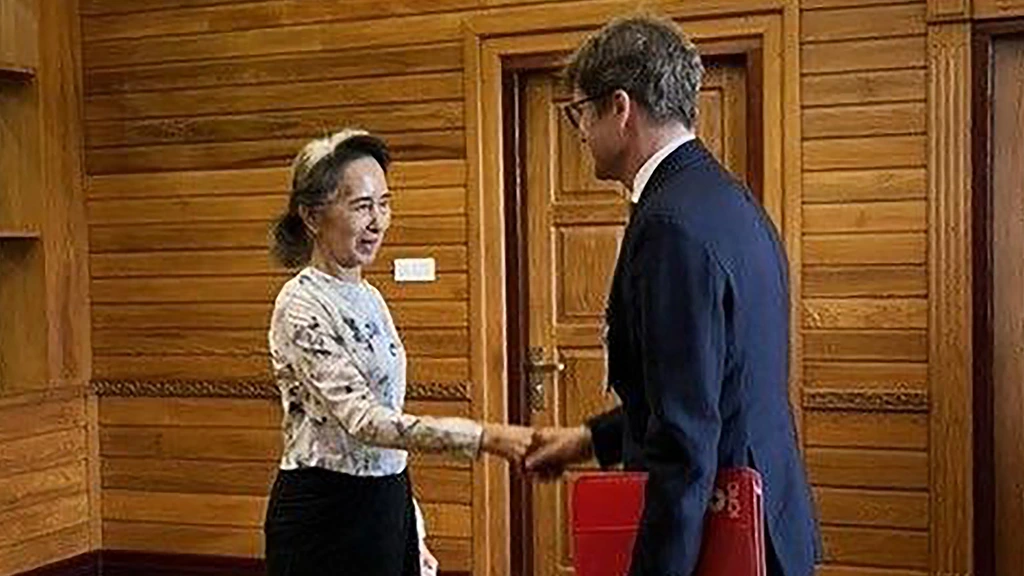
Aung San Suu Kyi, the detained former leader of Myanmar, has met with a representative from the International Committee of the Red Cross (ICRC). This encounter marks the first confirmed sighting of the 81-year-old in two and a half years, since her arrest in 2021 following a coup led by former junta leader Min Aung Hlaing. The military government released photographs of the meeting, which appear to show Suu Kyi in good health, though the quality of the images makes a definitive assessment difficult. While authorities have consistently stated she was alive, concrete proof had been lacking. Suu Kyi's youngest son, Kim Aris, described the meeting as a "first step" but emphasized it should not be the last, noting he has not yet received independent confirmation of his mother's condition. The specifics of their discussion remain undisclosed. Suu Kyi, a Nobel Peace Prize laureate from 1991 for her pro-democracy activism, is serving a 27-year sentence following a politically motivated trial, according to critics. Min Aung Hlaing, who seized power in 2021, was formally appointed president in April. The military regime is reportedly seeking legitimacy following disputed election results, with regional neighbors like China and Thailand desiring stability. Southeast Asian nations have pushed for meetings with Suu Kyi as a condition for improved relations with the junta, which had previously refused. This ICRC meeting may serve as a strategic move by the regime to demonstrate Suu Kyi's well-being and bolster ties with neighbors, without allowing her direct contact with the outside world. The post-coup period has seen violent crackdowns on protests, with thousands killed and millions displaced, alongside severe restrictions on media and humanitarian aid.
The meeting between Aung San Suu Kyi and the ICRC, publicized by the Myanmar junta, appears to be a strategic public relations maneuver aimed at enhancing the regime's international standing and regional relationships. By offering a controlled glimpse of the detained former leader, the junta seeks to project an image of normalcy and compliance with humanitarian concerns, potentially to ease pressure from neighboring countries and international bodies. However, the lack of independent verification of her condition and the limited nature of the contact suggest that this event is less about genuine engagement and more about managing perceptions. This tactic highlights the ongoing tension between the junta's desire for legitimacy and its determination to maintain absolute control, while international actors navigate the complex landscape of regional stability and human rights.
AI-generated to prompt reflection — not editorial opinion, not advice, not a statement of fact. How this works.
