Myanmar's Min Aung Hlaing: No Intermediaries Needed for Border Trade
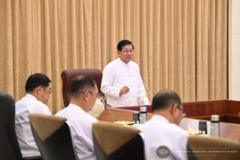
Myanmar's "transitional president," Min Aung Hlaing, has stated that border trade should be conducted directly between the governments of the two involved nations, asserting that no intermediary organizations are necessary. This statement was part of a broadcast covering national and international news on July 10, 2026. The focus of his remarks was on streamlining trade processes and potentially reducing reliance on third-party entities in bilateral economic exchanges. The announcement implies a desire for greater state control and direct engagement in cross-border commerce. Further details on the specific implications for existing trade agreements or the types of intermediary organizations being referred to were not provided in the initial report. The broadcast aimed to inform the public about significant global and domestic events.
Min Aung Hlaing's assertion regarding direct government-to-government border trade suggests a strategic move to consolidate control over economic flows and potentially capture greater value within state-controlled channels. This approach, while aiming for efficiency, may overlook the established roles of private sector actors and international trade facilitators who often provide essential services like logistics, financing, and market access. Such a policy shift could create friction with existing trade partners and disrupt established supply chains, potentially impacting the volume and efficiency of border commerce. The long-term viability will depend on the capacity of state entities to effectively manage these complex trade operations and the willingness of international partners to adapt to a more state-centric model.
AI-generated to prompt reflection — not editorial opinion, not advice, not a statement of fact. How this works.