Mymensingh Medical College Hospital Admits 220 Dengue Patients in July Amidst Rising Cases
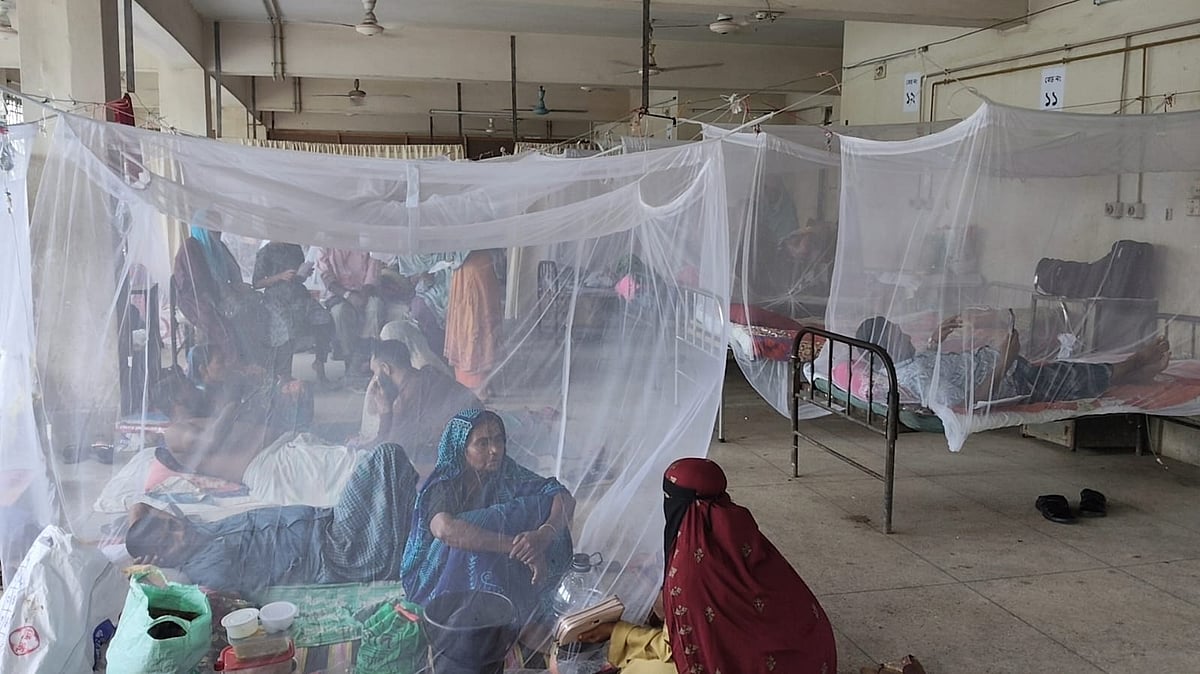
Mymensingh Medical College Hospital has admitted a total of 346 dengue patients this year, with a significant surge of 220 cases occurring in the first three weeks of July alone. This contrasts sharply with the 126 cases recorded from January to June. A majority of these patients are from the Mymensingh City Corporation area, though individuals from surrounding districts also seek treatment at the hospital. Tragically, five dengue-related deaths have been reported at the hospital this year: one in February, three in June, and one in July. Historically, dengue outbreaks in the region typically escalate from July to November, accounting for the majority of annual cases. For comparison, from January to July of 2025, only 176 dengue patients were admitted with a single fatality. Last year, from August to December, the hospital saw 2,227 dengue admissions and 28 deaths. As of Wednesday morning, 39 dengue patients remained hospitalized, with 10 new admissions and 11 discharges in the preceding 24 hours. In response to the escalating risk, the Mymensingh City Corporation has designated six "special zones" within the city—wards 6, 10, 11, 12, 13, and 14—due to higher dengue transmission potential. While only 4 cases were reported in the city from January to May, this rose to 8 in June and 58 by July 21, totaling 70 cases with one death this year. The City Corporation is implementing enhanced mosquito control measures in these special zones, including twice-daily fogging and spraying, alongside public awareness campaigns. Despite these efforts, residents in areas like Nowmahal report persistent mosquito problems and fear of the disease. The hospital has established a separate 20-bed dengue ward due to the influx of patients, with many requiring treatment on the floor due to overcrowding. Of the 242 patients admitted to this ward since July 2, approximately 56% are from the city corporation area, with a notable concentration from Nowmahal, Akua Madrasa Quarter, and Boundary Road.
The surge in dengue cases in Mymensingh, particularly in July, highlights a critical public health challenge driven by seasonal patterns and potentially inadequate preventative measures. The city corporation's designation of "special zones" and intensified mosquito control efforts are reactive responses to an escalating crisis. The disparity between the number of cases in the city and the surrounding districts suggests localized environmental factors or higher population density contributing to transmission. The hospital's strained capacity, with patients occupying floor space, indicates a need for more robust and scalable healthcare infrastructure to manage epidemic-level events. Future preparedness will require a multi-pronged strategy, integrating sustained vector control, improved waste management to eliminate breeding sites, and enhanced public health surveillance, alongside robust healthcare system resilience planning to anticipate and mitigate the impact of predictable seasonal outbreaks.
AI-generated to prompt reflection — not editorial opinion, not advice, not a statement of fact. How this works.