Mysterious Milky Way Object Accelerates Protons to Extreme Energies
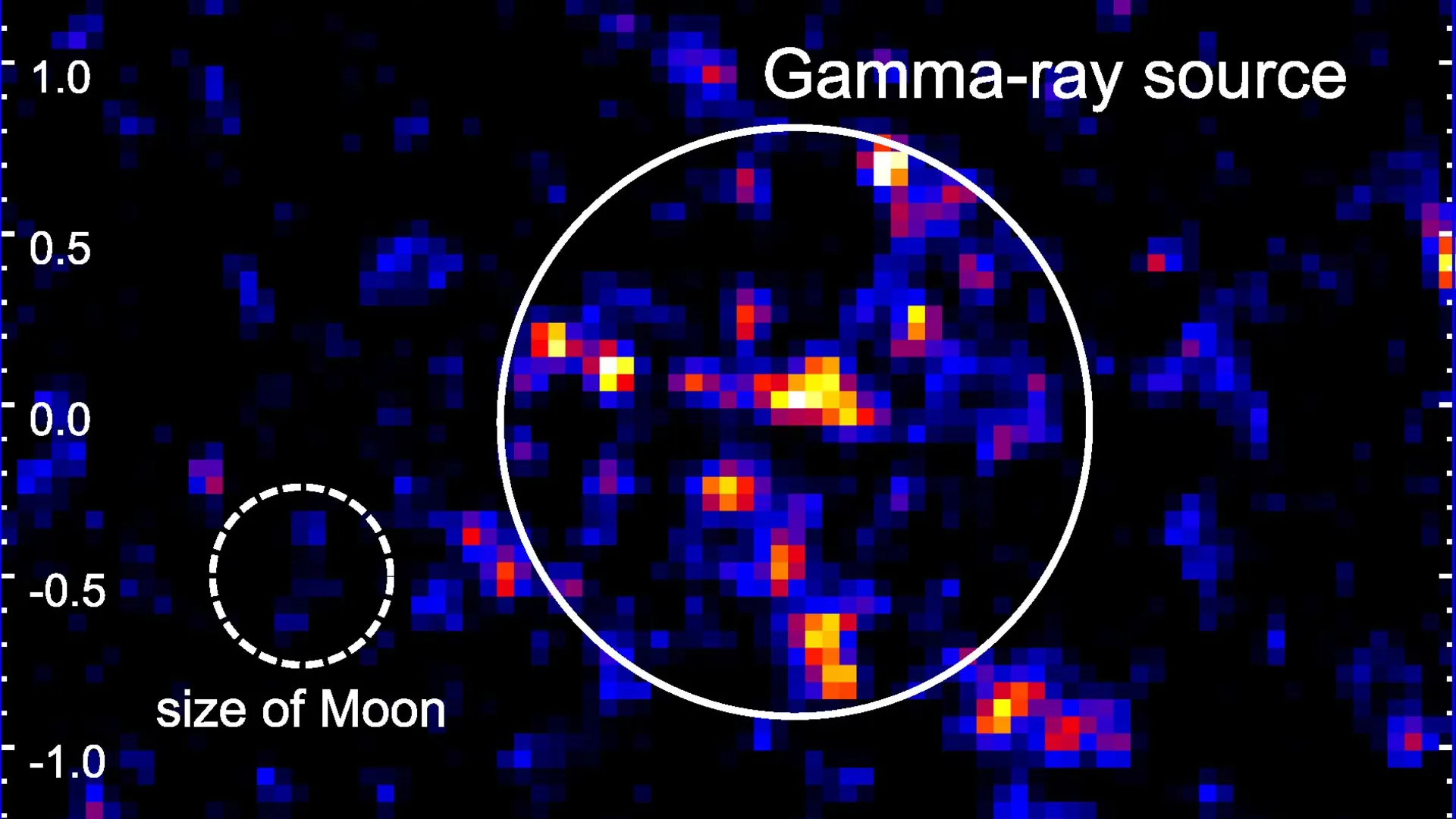
Scientists have identified a celestial object within the Milky Way, designated LHAASO J1912+1014u, capable of accelerating protons to energies exceeding one quadrillion electron volts. This significant discovery offers crucial insights into the origins of the galaxy's most powerful cosmic rays. Understanding these energetic particles is vital for comprehending their influence on the structure and evolution of the Milky Way. The identification of LHAASO J1912+1014u as a cosmic accelerator marks a key step in astrophysical research. Further study of this object could unlock secrets about the extreme environments within our galaxy. This finding contributes to the ongoing quest to map the sources of high-energy cosmic radiation. The research aims to shed light on the fundamental processes driving particle acceleration in space. The implications extend to our understanding of galactic dynamics and particle physics.
The identification of LHAASO J1912+1014u as a source of ultra-high-energy cosmic rays presents a compelling case for investigating galactic particle acceleration mechanisms. Understanding the specific astrophysical processes at play within our own galaxy could refine models of cosmic ray propagation and their impact on interstellar medium dynamics. This discovery prompts a re-evaluation of the energy budgets and particle physics within galactic environments, potentially influencing future observational strategies and theoretical frameworks for high-energy astrophysics over the next decade. Further characterization of this object's properties may reveal novel acceleration physics relevant to both galactic and extragalactic cosmic ray phenomena.
AI-generated to prompt reflection — not editorial opinion, not advice, not a statement of fact. How this works.