Mystery Behind Horses Pulling Jagannath's Chariots Explained
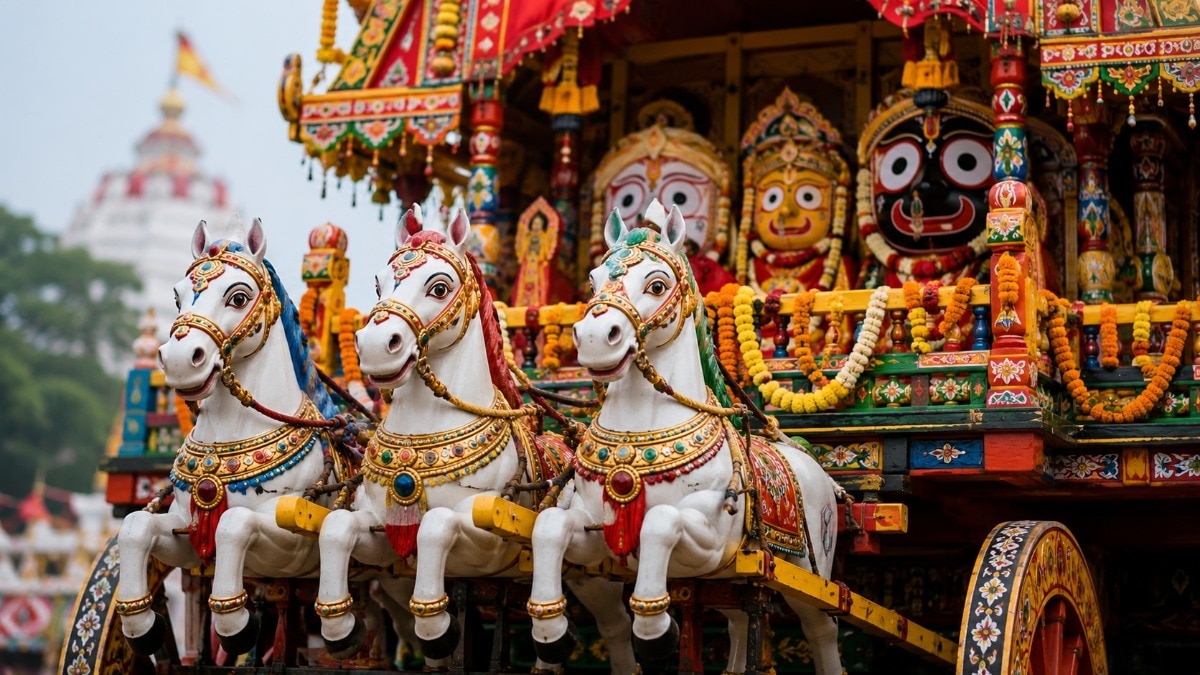
The Jagannath Rath Yatra in Odisha features chariots pulled by horses, and the names and symbolic meanings of these horses have been described. Lord Jagannath's chariot is adorned with four white horses named Shankh, Balahak, Shwet, and Haridashwa. These horses represent four specific virtues. The chariots themselves are traditionally pulled by devotees using ropes, yet the symbolic presence of horses adds a layer of spiritual significance to the procession. The Rath Yatra is a major Hindu festival celebrated annually in Puri, Odisha, drawing millions of pilgrims. The festival commemorates the journey of Lord Jagannath, his brother Balabhadra, and sister Subhadra from their temple to their aunt's temple. The horses on the chariots are not literal means of propulsion but are deeply rooted in Hindu mythology and symbolism. Each horse's name carries a profound meaning, contributing to the overall spiritual narrative of the festival. The specific virtues represented by the horses are integral to understanding the divine essence of the deities and their journey.
The Jagannath Rath Yatra's symbolic use of horses alongside rope-pulled chariots highlights a fascinating intersection of devotional practice and mythological representation. While devotees physically move the chariots, the horses serve as powerful allegorical figures, embodying divine attributes and spiritual concepts. This duality suggests a cultural framework where physical action is complemented by symbolic meaning, enriching the ritual experience. In the context of emerging AI-driven societies, understanding such layered symbolism offers insights into human cognition and the enduring power of narrative in shaping collective belief and behavior, even when technological advancements offer alternative modes of operation.
AI-generated to prompt reflection — not editorial opinion, not advice, not a statement of fact. How this works.