Mystery Solved: How Deadly Oil Beetle Larvae Lure Bees to Their Demise
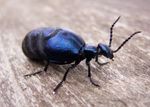
Scientists have unraveled the mystery of how oil beetle larvae exploit wild bees, leading them to their destruction. The larvae hitch a ride with unsuspecting wild bees back to their nests. Once inside, the beetle larvae consume the bee's young. The key question that remained was how these larvae manage to trick the bees into unknowingly transporting them. Research has now shed light on this parasitic relationship, revealing the sophisticated methods employed by the oil beetle larvae to ensure their survival at the expense of the bee population. This discovery provides crucial insights into the complex ecological interactions within bee colonies and the evolutionary strategies of parasitic insects.
This parasitic relationship highlights a sophisticated evolutionary strategy where oil beetle larvae exploit the social structure and nesting behaviors of wild bees. The larvae's ability to manipulate bee behavior for transport and subsequent predation demonstrates a complex co-evolutionary dynamic. Understanding these mechanisms is vital for developing conservation strategies for wild bee populations, which are crucial pollinators facing numerous threats. Future research could explore the specific chemical or behavioral cues the larvae use, and whether similar strategies are employed by other parasitic insects, offering insights into broader ecological principles of host exploitation and adaptation in the face of environmental change.
AI-generated to prompt reflection — not editorial opinion, not advice, not a statement of fact. How this works.