Naked Mole-Rat Queens Suppress Rival Reproduction Through Social Dominance
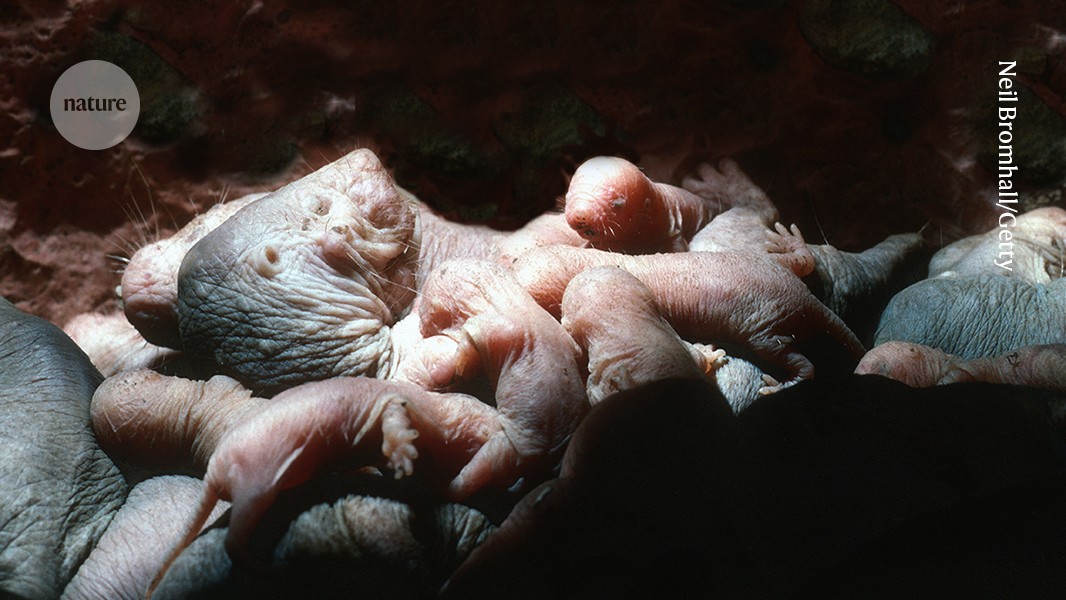
Naked mole-rat colonies are structured with a single breeding queen who maintains her reproductive monopoly by preventing other females from conceiving. This social suppression is a key factor in the species' unique eusociality, which resembles that of insects like ants and bees. The queen achieves this dominance through a combination of behavioral and physiological mechanisms. She actively suppresses the reproductive capabilities of subordinate females, ensuring that her lineage is the only one that propagates within the colony. This reproductive control is crucial for the colony's survival and efficiency, as it directs all resources towards the queen's offspring. The exact methods by which the queen enforces this reproductive suppression are complex and involve direct interactions and possibly pheromonal cues. Understanding these mechanisms provides insight into the evolution of sociality and reproductive strategies in mammals.
The reproductive suppression employed by naked mole-rat queens exemplifies a potent form of social control within a eusocial mammal. This strategy ensures colony cohesion and resource allocation efficiency by centralizing reproduction. From a systems perspective, this model highlights how extreme social structures can evolve through intense selective pressures, favoring cooperative behaviors that benefit the collective over individual reproductive success. The long-term implications for understanding mammalian social evolution and the potential for similar, albeit less extreme, reproductive hierarchies in other species warrant further investigation. This biological precedent offers a unique lens through which to examine the interplay of genetics, environment, and social dynamics in shaping reproductive outcomes.
AI-generated to prompt reflection — not editorial opinion, not advice, not a statement of fact. How this works.