Namibia's Electricity Generation Share Hovers Above 50%
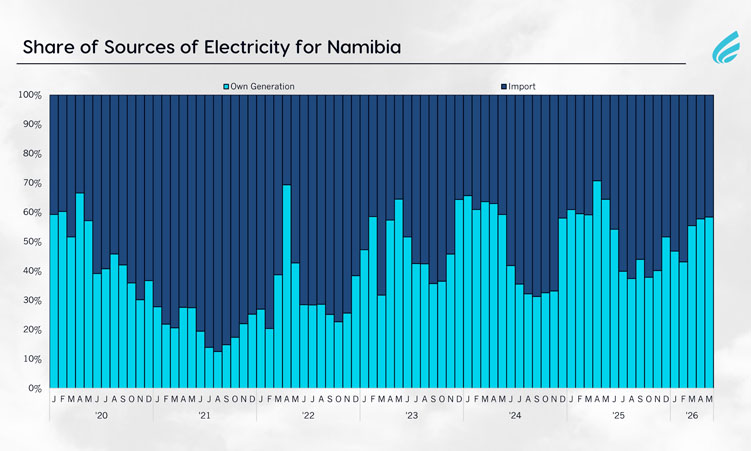
Namibia consistently relies on importing electricity, primarily from South Africa, with the Ruacana power station significantly influencing local generation levels. In 2025, the country generated 51.6% of its own electricity needs. For the first five months of the current year, this figure rose slightly to 52.2%. This recent performance is marginally higher than the historical average for the January-to-May period, which stands at 50.1%. However, the article notes that this long-term average might not fully represent the year-to-year fluctuations in domestic electricity production.
Namibia's consistent reliance on electricity imports, particularly from South Africa, highlights a strategic vulnerability and potential economic dependency. While domestic generation has recently surpassed the historical January-to-May average, the dependence on a single large facility like Ruacana suggests a need for diversification. Future energy policy should consider increasing the share of locally generated power through a broader mix of renewable sources to enhance energy security and potentially reduce import costs. Evaluating the long-term sustainability of current import levels against the backdrop of evolving regional energy markets and climate change impacts will be crucial over the next decade.
AI-generated to prompt reflection — not editorial opinion, not advice, not a statement of fact. How this works.