Nanoscale Polar Textures Mapped in Quantum Paraelectric Strontium Titanate
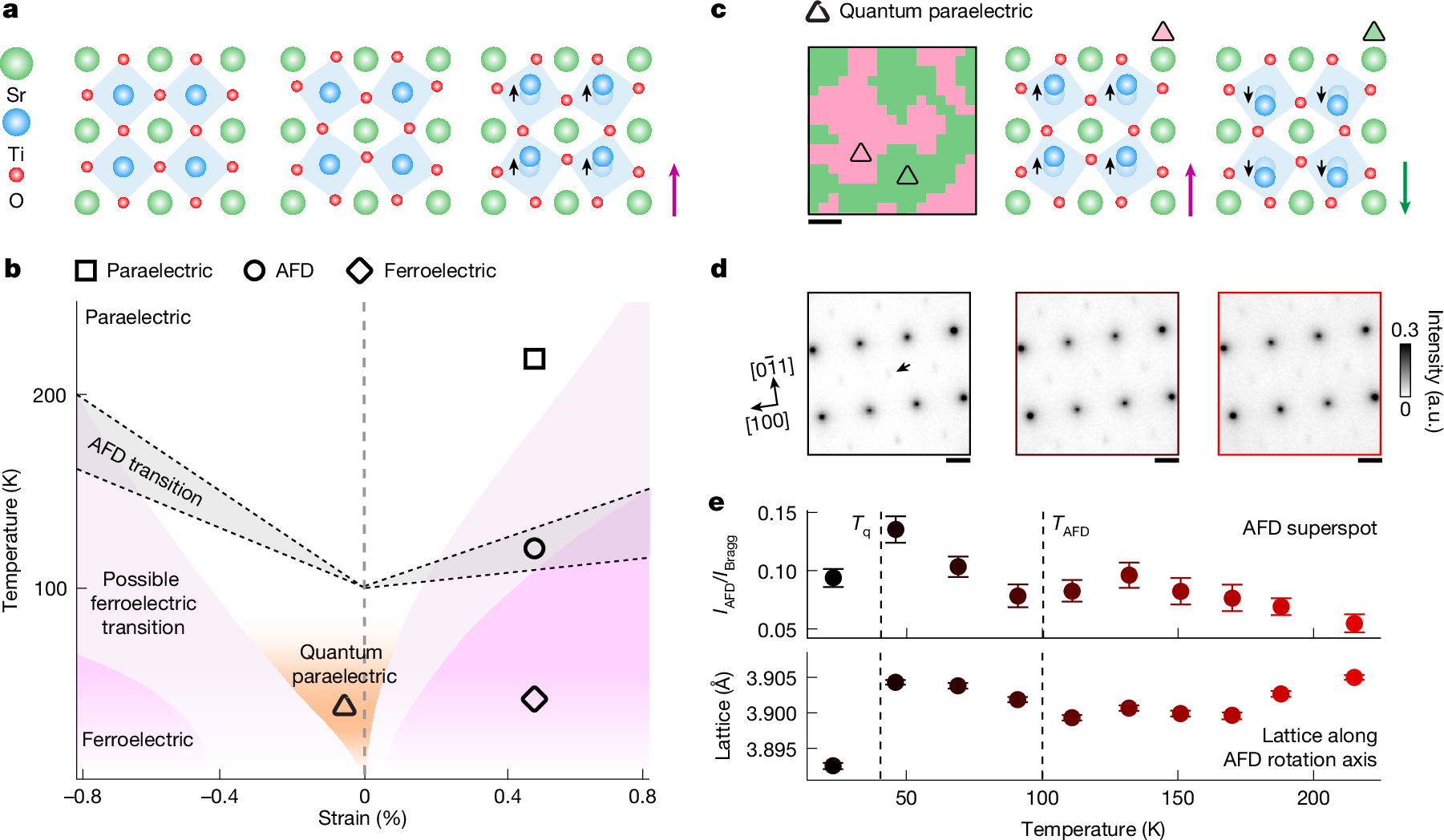
Researchers have successfully imaged nanoscale polar textures within the quantum paraelectric material strontium titanate (SrTiO3). This breakthrough provides unprecedented insight into the complex behavior of this technologically significant compound. Strontium titanate is a key material in various electronic applications, including capacitors and memory devices, due to its unique dielectric properties. Understanding the nanoscale structure and the distribution of polar regions is crucial for optimizing its performance and developing next-generation electronic components. The imaging techniques employed allowed scientists to visualize these intricate patterns at a resolution previously unattainable. This detailed visualization is expected to accelerate the development of new materials and devices that leverage the quantum properties of strontium titanate. The findings offer a deeper comprehension of ferroelectric transitions and domain structures in quantum materials. This research could pave the way for advancements in fields such as spintronics and quantum computing, where precise control over material properties at the nanoscale is paramount. Further investigation into the relationship between these textures and macroscopic electrical behavior is anticipated.
This research offers a detailed look into the microstructural properties of strontium titanate, a material with significant implications for advanced electronics. By visualizing nanoscale polar textures, scientists are gaining a deeper understanding of the fundamental physics governing its quantum paraelectric behavior. This enhanced comprehension can inform the design of more efficient and novel electronic devices, potentially impacting areas from data storage to quantum computing. The ability to map these textures at such fine resolutions presents an opportunity to precisely engineer material properties, addressing limitations in current technologies and opening new avenues for innovation in the coming decade. The focus on fundamental material science provides a robust foundation for future technological development.
AI-generated to prompt reflection — not editorial opinion, not advice, not a statement of fact. How this works.