NASA Begins Stacking Rocket for 2027 Artemis III Astronaut Mission
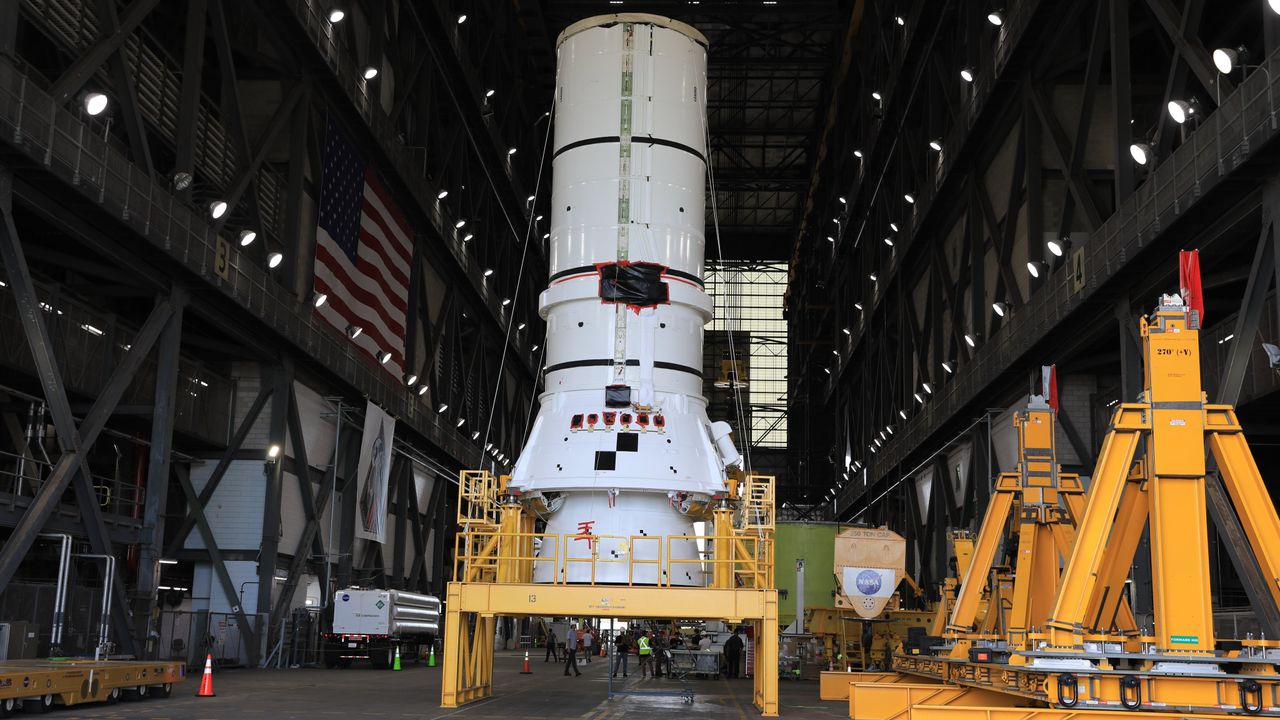
NASA has commenced the assembly of crucial segments for the Space Launch System (SLS) solid rocket boosters. These boosters are essential for launching astronauts on the Artemis III mission, which is targeted for as early as 2027. The Artemis program aims to return humans to the Moon, with Artemis III being a key mission in this endeavor. The stacking process involves carefully joining together the various components of the powerful rocket boosters. This significant step marks progress in the development and preparation for the upcoming lunar mission. The successful assembly of these boosters is critical for ensuring the SLS rocket has the necessary thrust to carry the Orion spacecraft and its crew to the Moon. NASA continues to work towards its ambitious goals of lunar exploration and establishing a long-term human presence on the Moon.
The commencement of rocket stacking for the Artemis III mission underscores NASA's commitment to its lunar exploration objectives. This phase of assembly is a critical juncture, requiring meticulous engineering and logistical coordination. The timeline for Artemis III, set for 2027, reflects the complex challenges inherent in developing and testing advanced spaceflight systems. The success of this mission will not only depend on the robust performance of the SLS rocket and its boosters but also on the integration of other mission-critical hardware and software. As NASA progresses, it navigates the intersection of technological innovation, budgetary constraints, and geopolitical considerations that shape the future of space exploration.
AI-generated to prompt reflection — not editorial opinion, not advice, not a statement of fact. How this works.