NASA Captures Image of Orphan Black Hole Devouring a Star
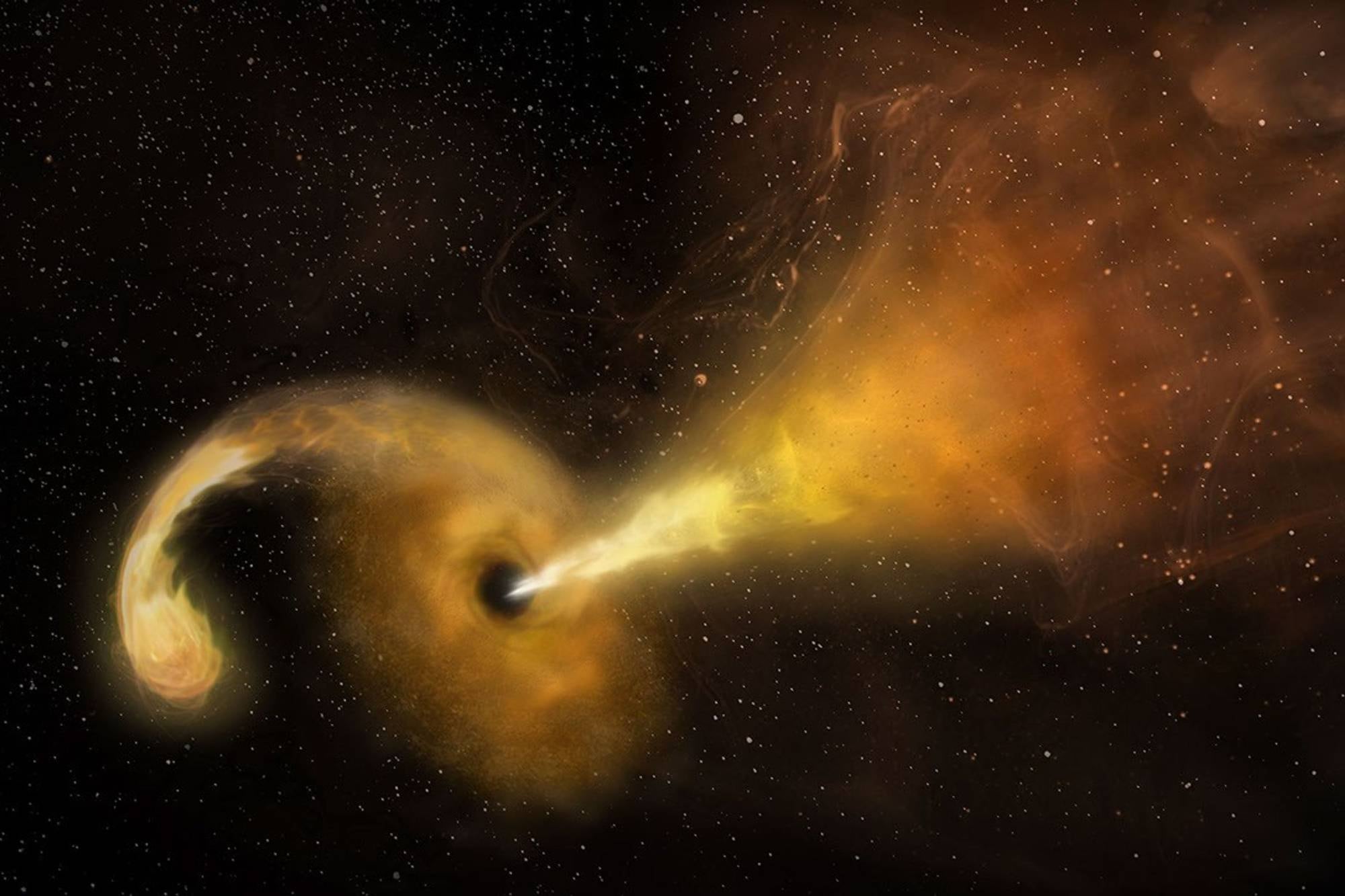
NASA has released images of a cosmic event where an "orphan" black hole, drifting through space without a host galaxy, consumed a star. This remarkable discovery was made possible by the agency's advanced observation capabilities, which detected the intense flash produced during the stellar destruction. The event provides a unique opportunity to study the behavior of rogue black holes and their interactions with surrounding matter. Scientists are particularly interested in how this finding might influence future strategies for detecting and understanding these elusive celestial objects. The observation offers valuable data on the feeding habits of black holes and the dynamics of galactic environments, even in the absence of a host galaxy. This phenomenon challenges previous assumptions about black hole habitats and their potential reach across the cosmos. The detailed imagery and data collected are expected to significantly contribute to our understanding of black hole evolution and their role in the universe.
This observation of an extragalactic black hole consuming a star highlights a significant advancement in astronomical detection capabilities. The event underscores the dynamic nature of the universe, where even solitary black holes can exert profound gravitational influence. This finding may prompt a re-evaluation of search methodologies for black holes, potentially expanding the scope beyond galactic centers to include interstellar and intergalactic space. Understanding the frequency and impact of such events is crucial for refining cosmological models and assessing the distribution of mass in the universe. Future research could focus on developing more sensitive instruments to detect similar phenomena, thereby enhancing our comprehension of the cosmic ecosystem and the life cycles of stars and black holes.
AI-generated to prompt reflection — not editorial opinion, not advice, not a statement of fact. How this works.