NASA Invites Media to Witness Nancy Grace Roman Space Telescope Launch
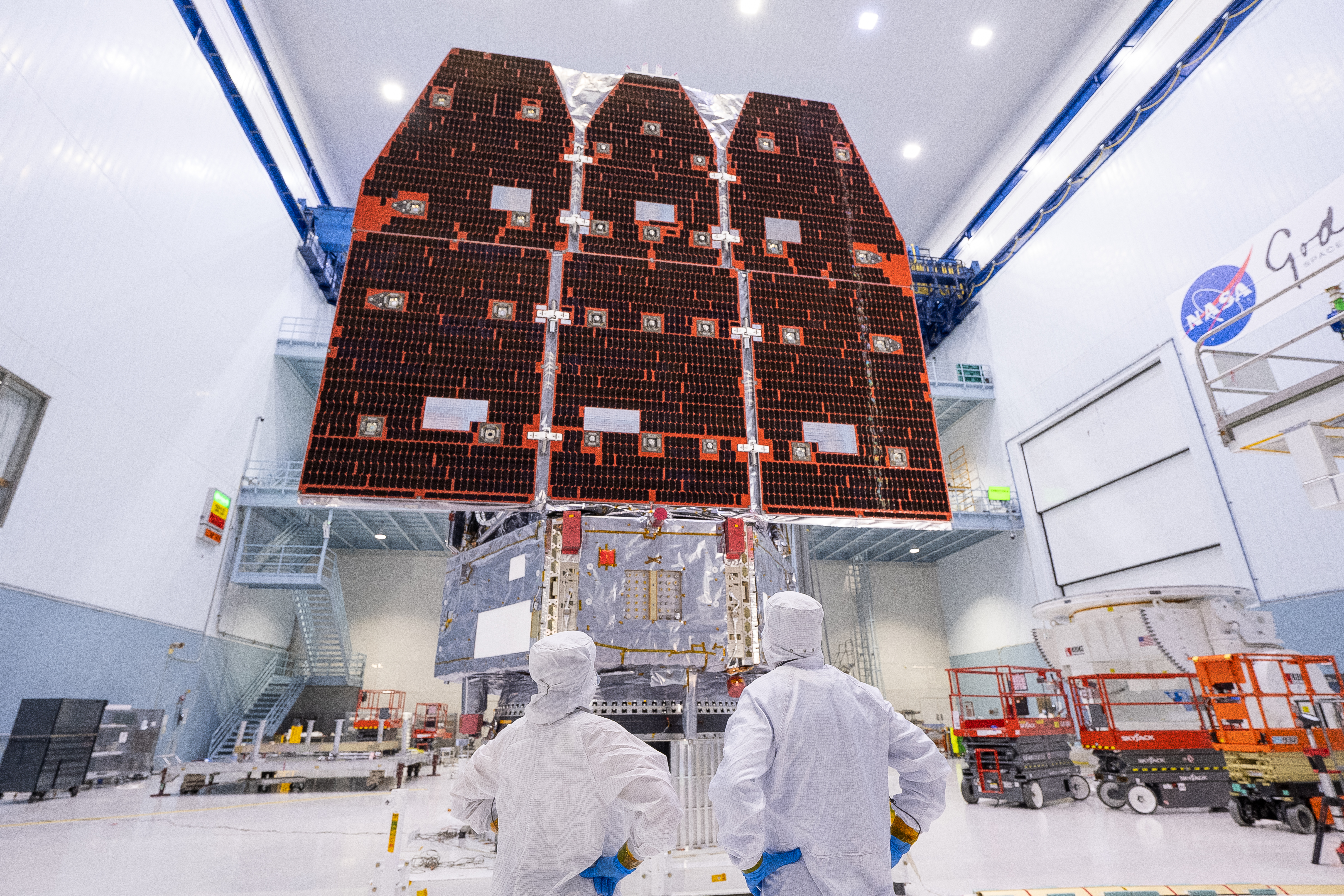
The U.S. space agency NASA has opened media accreditation for the upcoming launch of the Nancy Grace Roman Space Telescope. The Roman Space Telescope mission is slated for liftoff no earlier than 7:20 a.m. Eastern Time on Sunday, August 30th. This marks a significant milestone for NASA's ambitious space observatory program. The Roman telescope is designed to investigate some of the most compelling mysteries in astrophysics. Its primary goals include studying dark energy and dark matter, as well as discovering exoplanets. The telescope boasts a wide field of view, enabling it to survey vast regions of the sky more efficiently than previous instruments. This capability is crucial for its ambitious scientific objectives. Media interested in covering the launch event are encouraged to complete the accreditation process. Further details regarding the launch site and specific timings will be provided to accredited personnel. The successful deployment of the Roman Space Telescope is anticipated to yield groundbreaking discoveries, furthering our understanding of the universe.
The upcoming launch of the Nancy Grace Roman Space Telescope represents a significant investment in astronomical research, aiming to address fundamental questions about the universe's composition and evolution. By focusing on dark energy, dark matter, and exoplanet discovery, NASA is prioritizing research areas with profound implications for cosmology and astrobiology. The telescope's advanced instrumentation, particularly its wide field of view, suggests a strategic approach to maximizing observational efficiency and data acquisition. This mission aligns with a broader trend in space science towards instruments capable of broad surveys, which can accelerate the pace of discovery by identifying numerous targets for follow-up study. The success of this mission could provide critical data points for refining cosmological models and potentially altering our understanding of planetary formation beyond our solar system.
AI-generated to prompt reflection — not editorial opinion, not advice, not a statement of fact. How this works.