NASA Launches Daring Mission to Rescue Falling Observatory
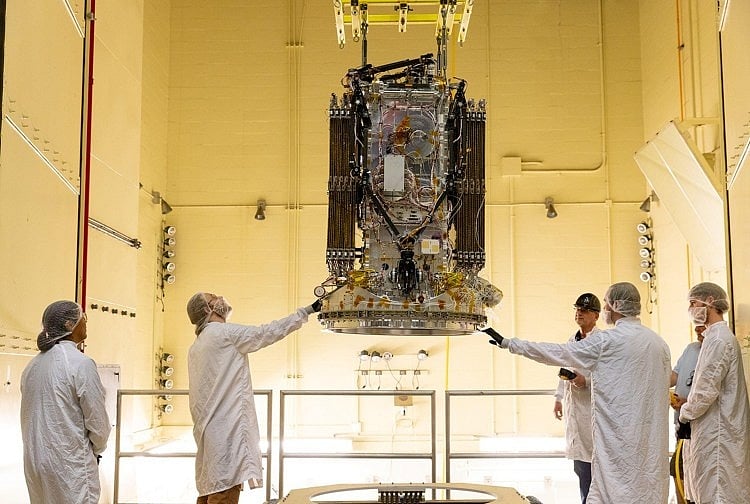
NASA has initiated an unprecedented rescue mission to save the Neil Gehrels Swift Observatory, a 3,200-pound space telescope that has been studying the universe for 22 years. The observatory has dangerously descended from its orbit due to atmospheric drag and recent solar storms, increasing its orbital decay. Without intervention, Swift is predicted to burn up upon re-entry into Earth's atmosphere. This mission marks a historic first, as no moving satellite has ever been physically retrieved and repositioned in space before.
The observatory's descent is exacerbated by the current peak of the Sun's 11-year cycle in 2024, which causes intense solar flares. These flares expand Earth's atmosphere, increasing friction on satellites like Swift, which lack their own propulsion systems. Efforts by researchers at Penn State University to reduce Swift's power consumption were insufficient to counteract this increased drag.
To address this crisis, NASA contracted Catalyst Space Technologies in September to develop a solution within a nine-month timeframe. The company designed a robotic satellite named 'Link' to capture and boost Swift back into a safe orbit. Link was launched via a Northrop Grumman Pegasus XL rocket deployed from an L-1011 aircraft over the Pacific Ocean. The mission's success hinges on Link's ability to carefully attach to Swift, which has a fragile outer shell after two decades in space, and then use its ion thrusters to slowly push Swift to a stable altitude of 600 kilometers over two to three months. If successful, Swift will resume its scientific operations, and Link will self-destruct in Earth's atmosphere. This operation could establish a blueprint for future satellite servicing, repair, and refueling, crucial for long-term space presence.
This mission highlights the growing challenge of space debris and the need for sustainable space infrastructure. As the number of satellites increases, the risk of orbital decay and collisions rises, necessitating innovative solutions beyond traditional mission planning. The 'Link' mission's success could pave the way for a new era of in-orbit servicing, extending the lifespan of valuable assets and reducing the cost and environmental impact of space exploration. However, the inherent fragility of aging spacecraft and the complexities of remote robotic manipulation present significant technical hurdles. The potential for this operation to become a 'blueprint' for future endeavors underscores the critical importance of developing robust, adaptable technologies for maintaining and upgrading our presence in orbit, especially as we anticipate the increasing demands of the AI era on space-based infrastructure.
AI-generated to prompt reflection — not editorial opinion, not advice, not a statement of fact. How this works.