NASA's Curiosity Rover Discovers Vast 'Honeycomb' Terrain on Mars
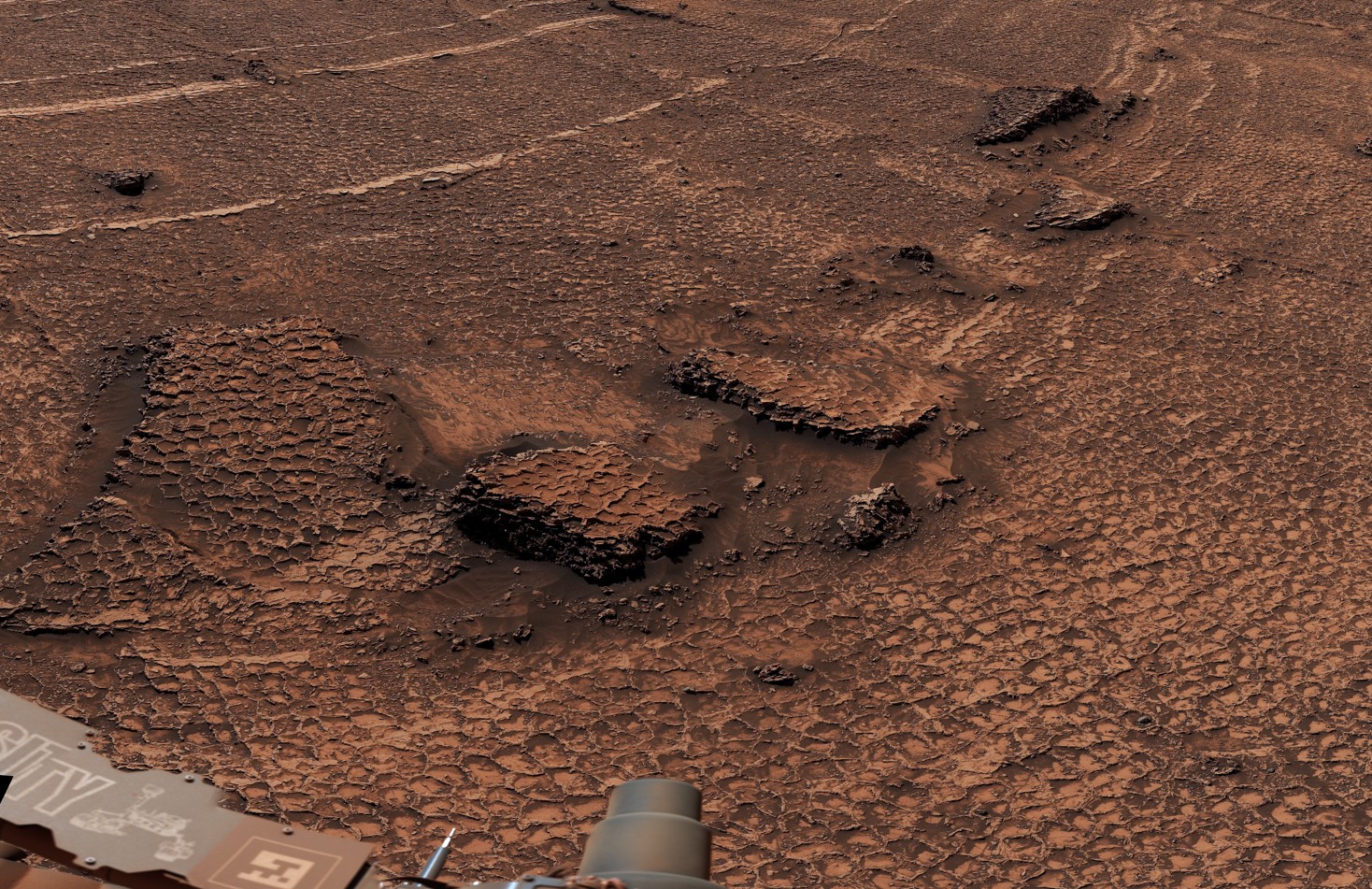
NASA's Curiosity rover has identified an extensive area on Mars covered in small, geometric formations resembling honeycomb structures. These features, known as polygonal fractures, have been observed previously on the planet but never across such a wide expanse. The images were captured on June 19 and 20 as the rover began ascending a valley named Valle Grande. The 360-degree panorama reveals these polygons in all directions, extending across the sides of a rocky elevation approximately six meters high. Each individual polygon measures between four and eight centimeters. Scientists are currently investigating the origin of this terrain, with possibilities including ancient mud cracks from drying wet soil, cyclical heating and cooling, or pressure-induced water expulsion from buried sediments. Similar structures found elsewhere are often attributed to ancient mud cracks formed when wet soil dried. The Curiosity team is analyzing the shapes and chemical composition of these formations to understand Mars' environmental changes over billions of years. The rover, which landed in August 2012, has been exploring Mount Sharp since 2014, a region known to preserve evidence of past lakes and watercourses. Previous discoveries by Curiosity include sulfur crystals, meteorites, and carbon-based molecules relevant to RNA and DNA, suggesting Mars once possessed water, nutrients, and chemical conditions suitable for microbial life, though not definitive proof of past life.
The discovery of extensive polygonal fractures on Mars by the Curiosity rover offers a novel geological dataset. Understanding the formation mechanisms of these formations, whether through desiccation, thermal cycling, or pressure dynamics, is crucial for refining models of Martian geological history and past hydrological cycles. The presence of such features across a broad area, as opposed to isolated occurrences, could indicate more widespread or prolonged environmental conditions than previously understood. Further analysis of their chemical composition may provide insights into subsurface water activity and mineral alteration processes, contributing to the ongoing search for evidence of past habitability and the planet's long-term environmental evolution.
AI-generated to prompt reflection — not editorial opinion, not advice, not a statement of fact. How this works.