NASA's ESCAPADE Spacecraft Captures Earth and Moon from Deep Space
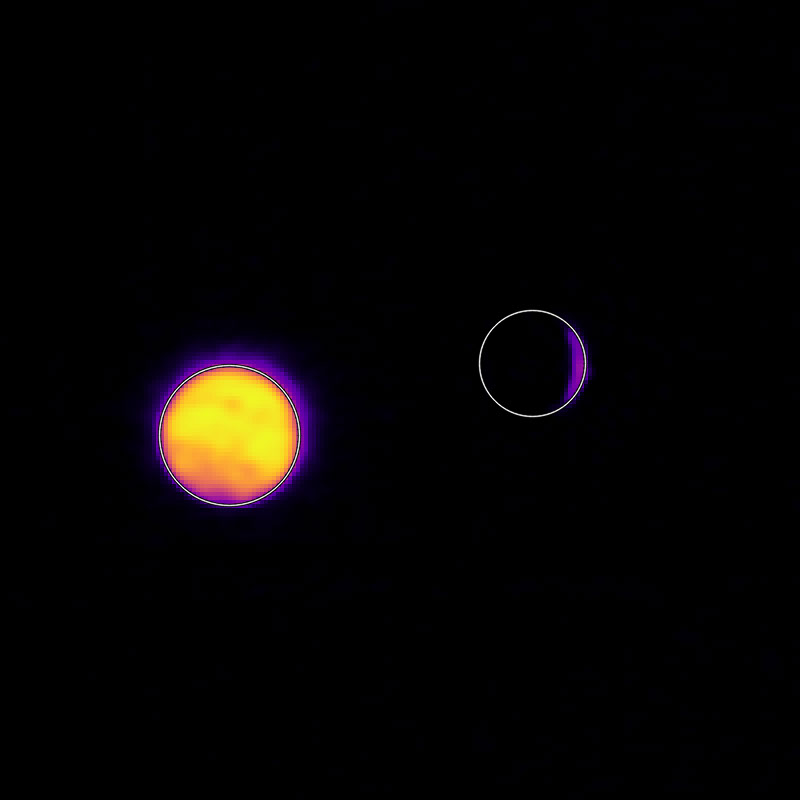
One of NASA's two Escape and Plasma Acceleration and Dynamics Explorers (ESCAPADE) spacecraft, which are en route to Mars, successfully photographed Earth and the Moon on July 3. The images were taken in both visible and thermal infrared light. At the moment the photos were captured, the ESCAPADE spacecraft was positioned 363,250 miles (584,600 kilometers) away from Earth and 115,600 miles (186,100 kilometers) from the Moon. This vantage point allowed for a unique perspective on the Earth-Moon system. The ESCAPADE mission is designed to study the plasma environment of Mars. These images represent an early operational success for the spacecraft as it travels through interplanetary space.
The capture of this "family portrait" by the ESCAPADE mission highlights the increasing capability of spacecraft to conduct scientific observation even during transit phases. While the primary mission focuses on Mars' plasma environment, the ability to gather imagery of Earth and the Moon from significant interplanetary distances demonstrates the robustness of modern deep-space instrumentation. This dual utility, serving both scientific objectives and public engagement through compelling visuals, suggests a potential model for future missions to maximize scientific return and public support by leveraging transit periods for opportunistic data collection and outreach.
AI-generated to prompt reflection — not editorial opinion, not advice, not a statement of fact. How this works.