NASA's IXPE Telescope Maps Magnetic Fields of a Pulsar in Lighthouse Nebula
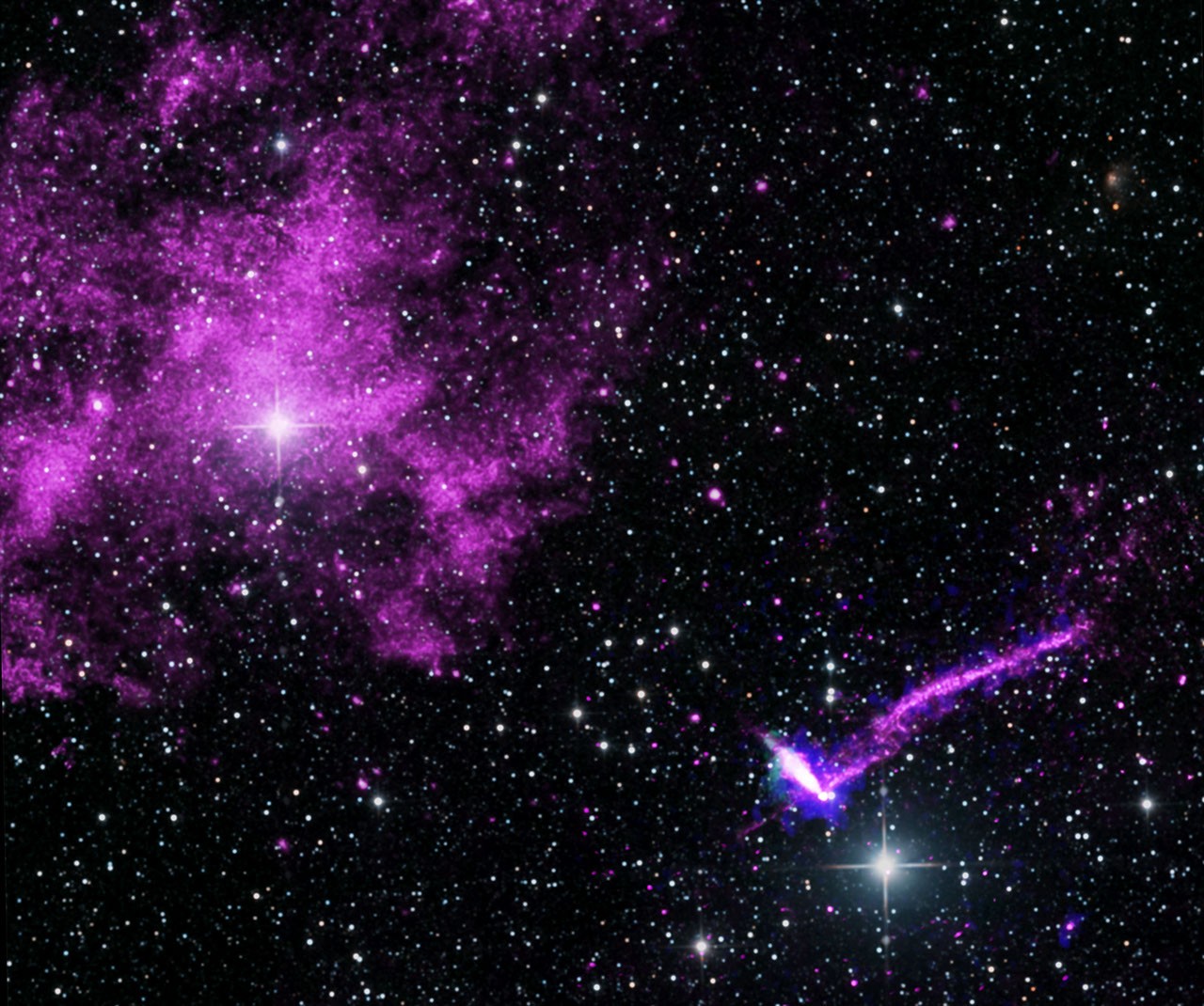
For the first time, scientists have utilized NASA's IXPE (Imaging X-ray Polarimetry Explorer) to directly measure the magnetic fields surrounding the pulsar PSR J1101−6101. This pulsar is situated within a region commonly known as the Lighthouse Nebula. The findings offer novel perspectives on the structural characteristics of some of the universe's most extreme celestial objects. Pulsars are rapidly rotating neutron stars that emit beams of electromagnetic radiation. These beams are detectable as pulses of radiation when they sweep across Earth, similar to how a lighthouse beam sweeps across the sea. The IXPE mission is specifically designed to study the polarization of X-ray light, which allows scientists to infer the properties of magnetic fields in high-energy astrophysical sources. This direct measurement of PSR J1101−6101's magnetic field is a significant advancement in understanding these energetic phenomena. The data gathered by IXPE is expected to refine theoretical models of pulsar behavior and the environments they inhabit. Further analysis of the IXPE data will continue to shed light on the complex physics governing these cosmic 'lighthouses'.
The successful deployment of NASA's IXPE telescope to map pulsar magnetic fields represents a significant stride in observational astrophysics. By directly measuring magnetic field properties, scientists can refine theoretical models of neutron star magnetospheres and their associated radiation mechanisms. This empirical data is crucial for understanding the extreme physics at play in these objects, potentially informing future research into particle acceleration and energy dissipation processes. The ability to probe such intense magnetic environments with unprecedented detail offers a valuable lens through which to view the fundamental forces governing the universe, aiding in the development of more robust astrophysical theories for the coming decade.
AI-generated to prompt reflection — not editorial opinion, not advice, not a statement of fact. How this works.