NASA's Juno Probe Reveals Subsurface Secrets of Jupiter's Volcanic Moon Io
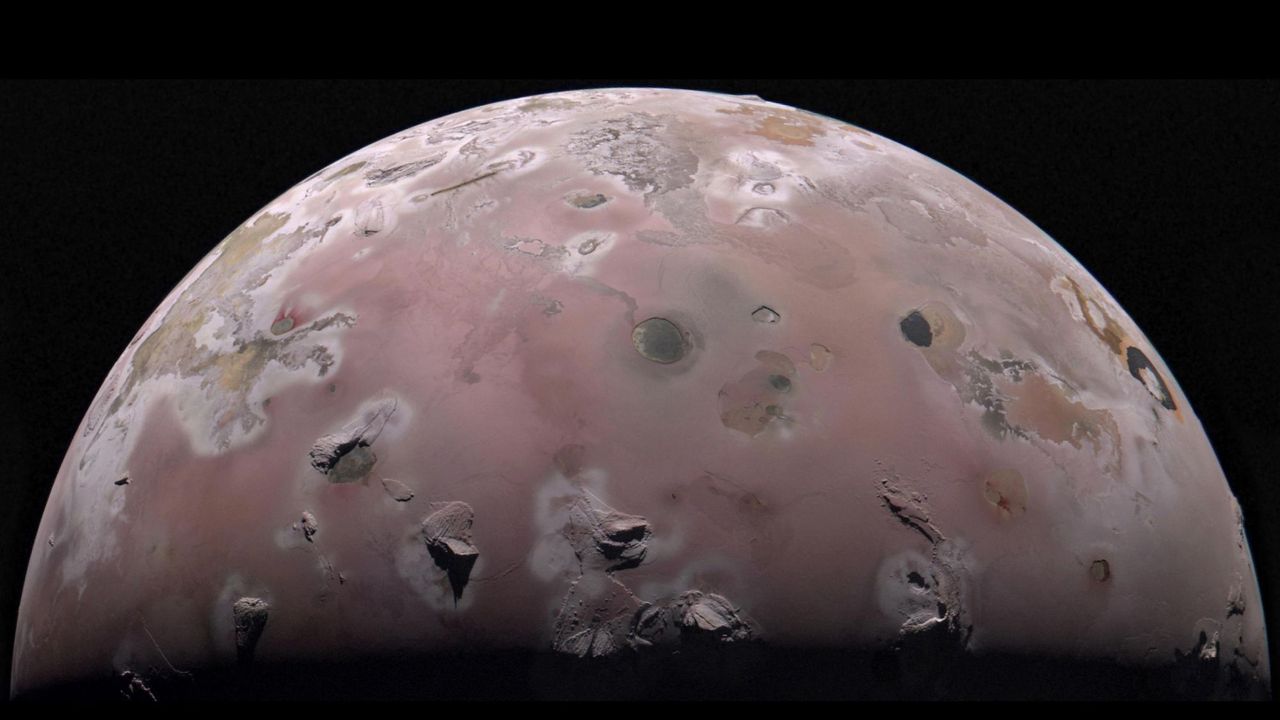
NASA's Juno probe has captured new data offering a glimpse beneath the surface of Jupiter's moon Io, a celestial body known for its intense volcanic activity. This exploration aims to deepen our understanding of volcanic processes not only on Io but potentially across the solar system. The findings are expected to revolutionize the methods scientists employ when studying volcanoes. This includes terrestrial volcanoes, suggesting a potential for comparative planetology that bridges the gap between extraterrestrial and Earth-based geological phenomena. The probe's observations are crucial for deciphering the internal mechanisms driving Io's extreme volcanism. Scientists hope this data will provide insights into the heat sources and magma dynamics within the moon. Such knowledge could have far-reaching implications for understanding planetary formation and evolution. The study of Io's subsurface is particularly challenging due to its highly active and dynamic surface. Juno's advanced instrumentation is designed to penetrate these obscuring layers. The mission's success in gathering this information marks a significant step forward in planetary science. Further analysis of the data is anticipated to yield more detailed revelations in the coming months and years.
The Juno probe's investigation into Io's subsurface volcanic activity offers a novel perspective on planetary geology. By examining the internal structure of a highly active moon, scientists can refine models of volcanic processes, potentially improving our understanding of Earth's own geological dynamics and seismic forecasting. This comparative approach, leveraging data from distant celestial bodies to inform terrestrial science, highlights the interconnectedness of planetary systems. As AI continues to advance, its application in analyzing complex geological datasets from missions like Juno will be crucial for identifying subtle patterns and predicting phenomena. The long-term implications could include more robust hazard assessments for volcanic regions on Earth and a deeper comprehension of the conditions necessary for geological activity on exoplanets.
AI-generated to prompt reflection — not editorial opinion, not advice, not a statement of fact. How this works.