NASA's Mars Rover Opportunity Launched July 7, 2003
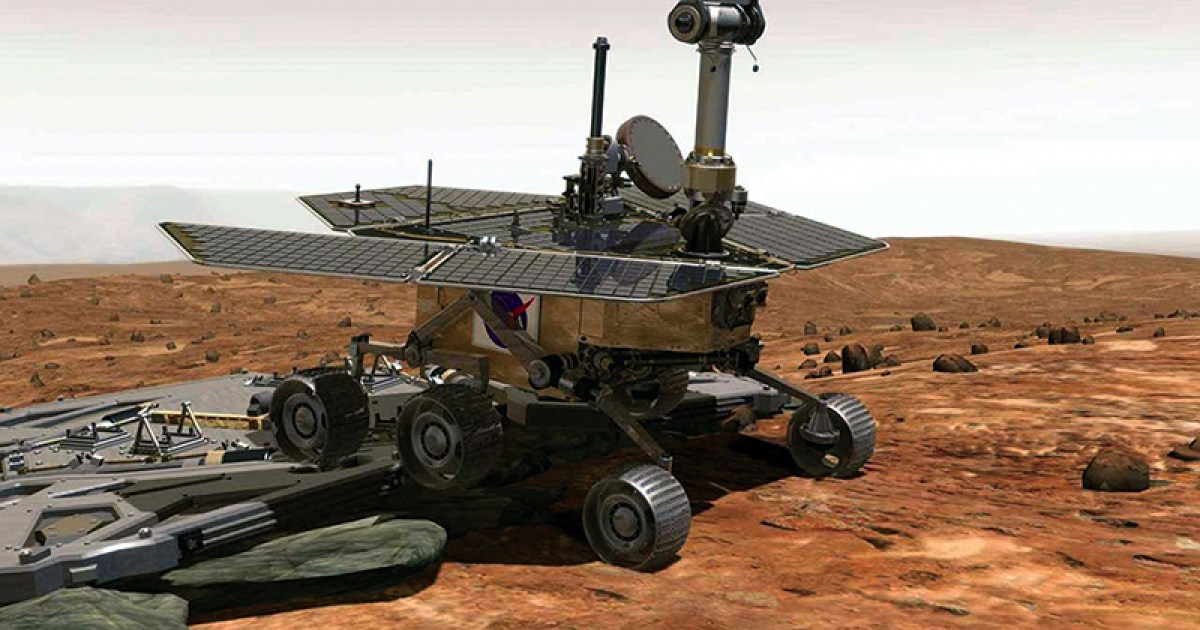
NASA's Mars Exploration Rover Opportunity began its journey to the Red Planet on July 7, 2003. This launch followed that of its twin rover, Spirit, which departed for Mars on June 10, 2003. Both rovers were designed to explore the Martian surface, building upon the legacy of NASA's first Mars rover, Sojourner, which landed in 1997. Opportunity and Spirit were scheduled to land on Mars in January 2004. Their missions were anticipated to last at least 90 days, but both rovers significantly exceeded this initial operational timeframe, conducting observations for much longer than planned.
The launch of the Mars Exploration Rover Opportunity, alongside its twin Spirit, marked a significant advancement in robotic planetary exploration. These missions were designed to extend scientific understanding of Mars beyond previous efforts, emphasizing long-duration surface operations. The success of these rovers in surpassing their planned mission durations highlights the robustness of engineering and the potential for unexpected scientific discoveries when systems are designed for longevity and adaptability. This approach informs future deep-space missions, suggesting that investing in durable hardware and flexible operational strategies can yield disproportionately high returns in scientific knowledge and technological capability over the long term.
AI-generated to prompt reflection — not editorial opinion, not advice, not a statement of fact. How this works.