NASA's Nancy Grace Roman Telescope Nears Launch, Set to Complement James Webb
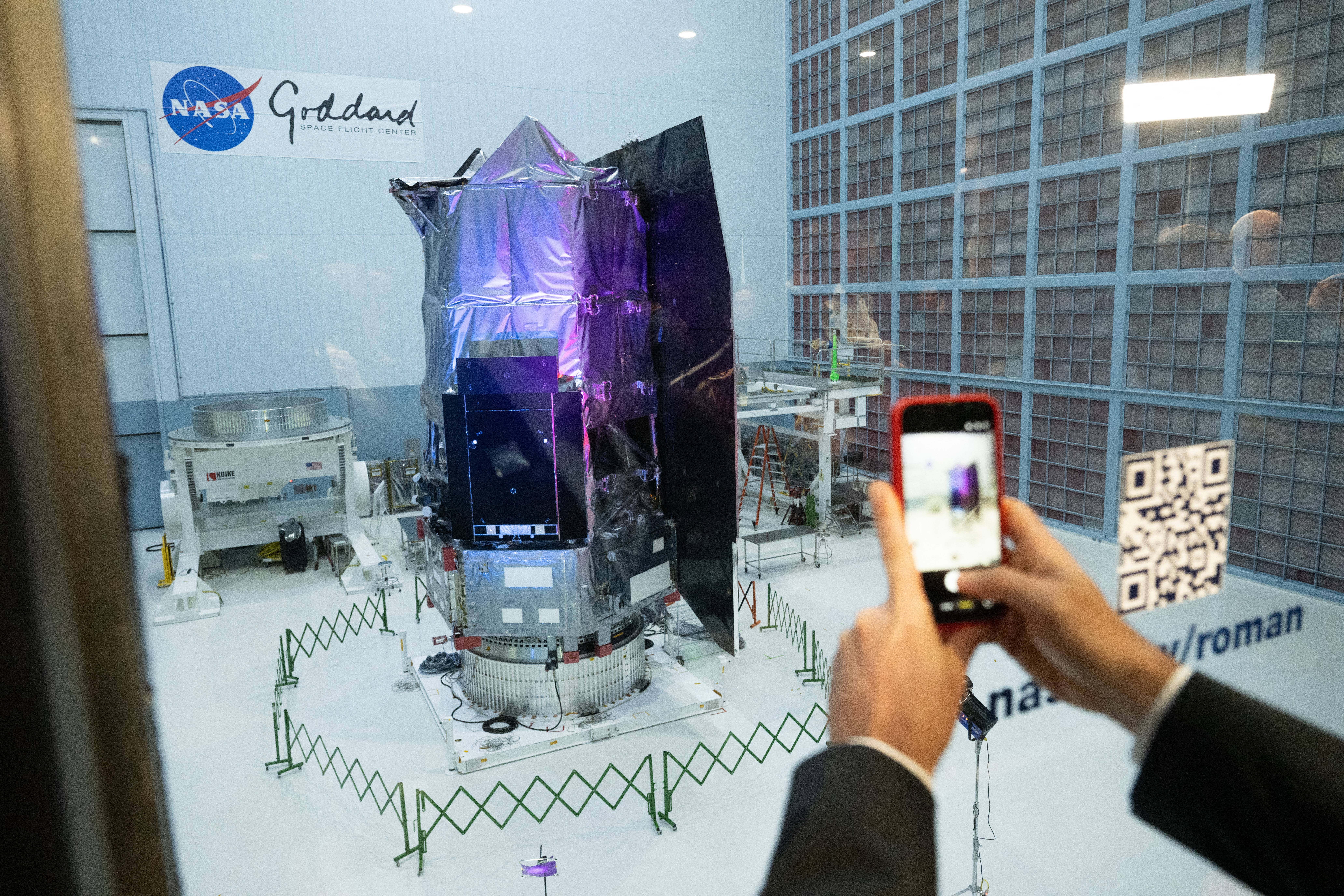
NASA has revealed new details about the upcoming launch of the Nancy Grace Roman Space Telescope, designed to work in tandem with the James Webb Space Telescope to enhance astronomical observations. The observatory is now in its final preparation phase, with the equipment soon to be attached to its launch vehicle and protected for ascent. The Roman telescope boasts the capability to survey vast areas of the sky with high speed and definition, significantly reducing observation times compared to previous instruments. For instance, a survey of the Milky Way that would take a century with the Hubble Space Telescope could be completed by Roman in just one month.
Scheduled for launch on August 30, 2026, from Kennedy Space Center in Florida aboard a SpaceX Falcon Heavy rocket, the Roman will be positioned at the second Sun-Earth Lagrange point (L2), approximately 1.5 million kilometers from Earth, a region also utilized by the James Webb. While often compared, Roman is not a replacement for Webb; they are designed for complementary tasks. Webb excels at detailed observation of small areas and distant objects, functioning like a telephoto lens. Roman, conversely, will act as a wide-angle lens, capturing expansive sky regions rapidly to identify phenomena like planets, galaxies, and supernovas. These discoveries can then be studied in greater depth by the James Webb. The mission's primary research areas include the expansion of the Universe, dark matter, and exoplanets, with an expected operational lifespan of five to ten years.
The introduction of the Nancy Grace Roman Space Telescope represents a strategic enhancement of NASA's observational capabilities, moving towards a more integrated approach to cosmic exploration. By leveraging Roman's wide-field survey capacity alongside Webb's deep-field precision, the agency aims to accelerate the discovery of celestial phenomena and provide broader context for detailed studies. This division of labor addresses the inherent trade-offs between survey speed and observational depth, optimizing resource allocation for scientific inquiry. The planned deployment to the L2 Lagrange point, shared with Webb, suggests a coordinated operational strategy. Future astronomical endeavors may increasingly rely on such synergistic instrument designs to efficiently map and analyze the universe, potentially uncovering patterns and anomalies that would remain hidden within narrower observational scopes.
AI-generated to prompt reflection — not editorial opinion, not advice, not a statement of fact. How this works.