NASA's Psyche Mission Captures Evolving Crescent Views of Mars
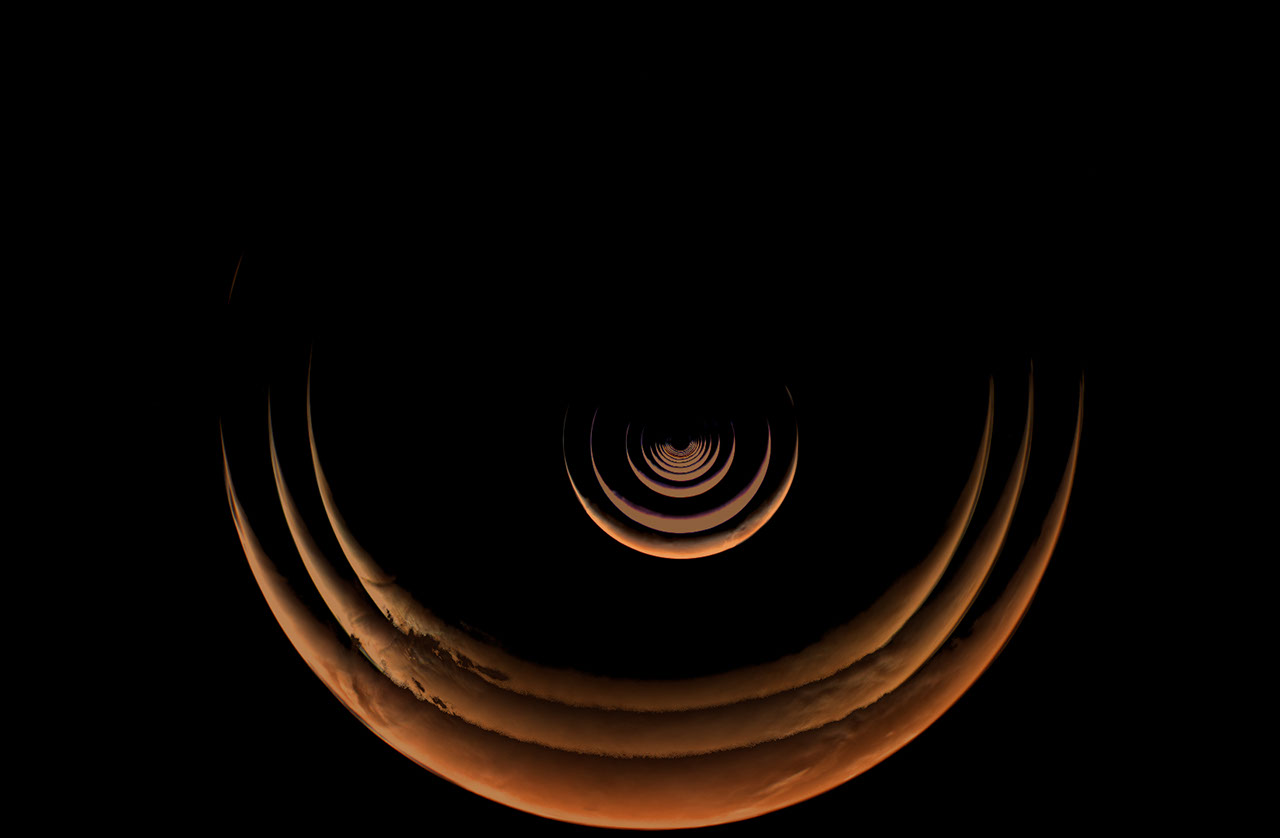
NASA's Psyche mission has captured a series of images showcasing the changing crescent shape of Mars as the spacecraft approached the planet. These images were taken between May 2 and May 15, 2026, during the mission's flyby for a gravity assist maneuver. The series begins with the smallest Martian crescent visible when Mars was at its farthest point from the spacecraft. As the Psyche spacecraft drew closer, the visible crescent of Mars progressively grew larger in the captured images. This visual progression demonstrates the spacecraft's trajectory and its increasing proximity to the Red Planet. The Psyche mission is primarily focused on studying a metal-rich asteroid, also named Psyche, located in the main asteroid belt between Mars and Jupiter. The gravity assist from Mars is a crucial maneuver designed to help the spacecraft conserve fuel and adjust its trajectory for its long journey to the asteroid. The mission aims to understand the composition and origin of the asteroid, which is believed to be the core of an early planetesimal. Studying this unique asteroid could provide valuable insights into the formation of rocky planets, including Earth.
The Psyche mission's imaging of Mars during its gravity assist highlights the sophisticated navigation and observational capabilities of modern space exploration. Such maneuvers are critical for optimizing mission trajectories and conserving propellant, demonstrating efficient resource management in deep space. The visual documentation of Mars's changing appearance serves not only scientific data collection but also as a powerful public engagement tool, illustrating the dynamic interplay between celestial bodies. In the context of an increasingly AI-driven era, the ability to precisely control spacecraft and interpret complex visual data underscores the advancements in autonomous systems and remote sensing. These missions contribute to a broader understanding of planetary formation and the solar system's history, offering perspectives on Earth's own origins and future.
AI-generated to prompt reflection — not editorial opinion, not advice, not a statement of fact. How this works.