NASA's Roman Space Telescope Poised to Detect Black Holes Devouring Stars
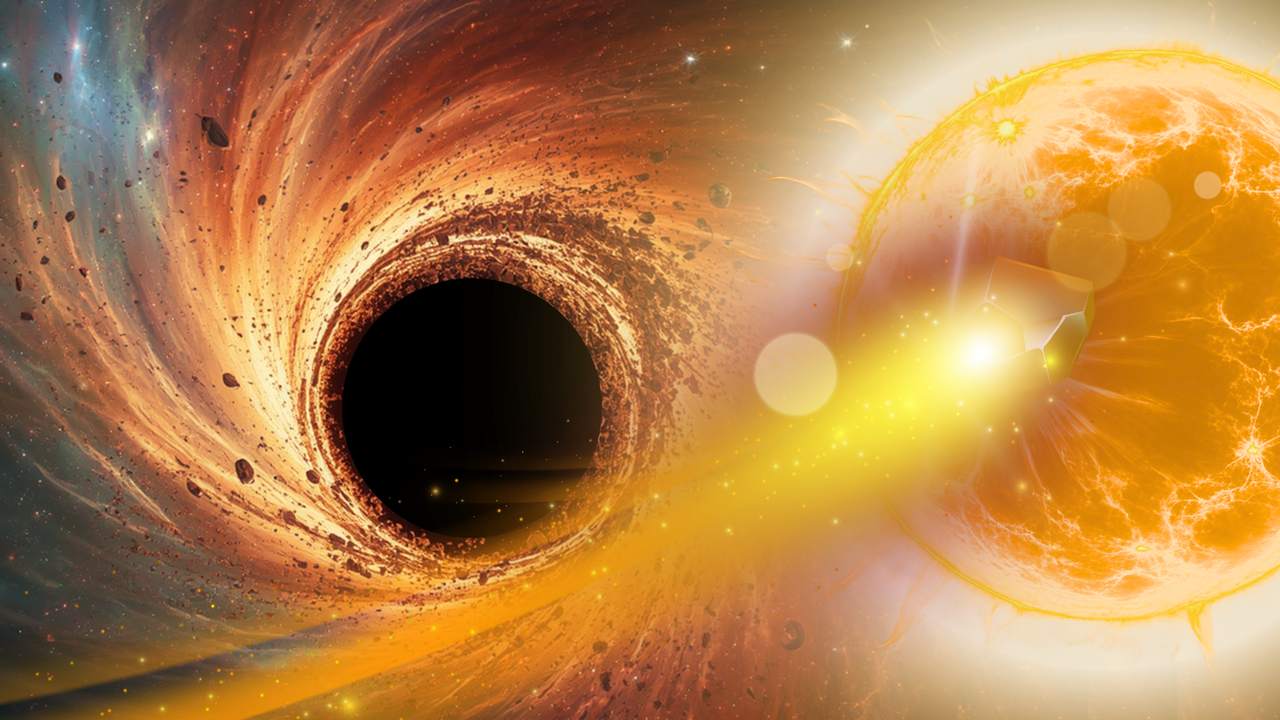
NASA's upcoming Nancy Grace Roman Space Telescope is expected to significantly enhance our ability to observe black holes, particularly those that engage in violent interactions with stars. The telescope's advanced capabilities are anticipated to leave no stellar victim undiscovered, even those occurring during the universe's early stages, often referred to as cosmic noon. This mission aims to provide unprecedented insights into the behavior and prevalence of these powerful cosmic phenomena. The Roman Space Telescope is scheduled for launch on August 30. Its mission will focus on studying dark energy, exoplanets, and a variety of astronomical phenomena, with the detection of stellar disruption events by black holes being a key objective. The observatory's wide field of view and high sensitivity will allow astronomers to capture these rare and dramatic events across vast cosmic distances. Scientists anticipate that the data gathered will revolutionize our understanding of black hole populations and their impact on galactic evolution.
The deployment of the Nancy Grace Roman Space Telescope represents a significant advancement in observational astronomy, promising to shed light on previously elusive cosmic events. By enabling the detection of black holes interacting with stars, the mission addresses fundamental questions about galactic evolution and the distribution of massive compact objects. The telescope's capabilities are designed to overcome previous observational limitations, potentially revealing a more comprehensive picture of these phenomena. This enhanced observational power could refine theoretical models of black hole growth and stellar dynamics, offering a clearer understanding of the universe's energetic processes over cosmic timescales.
AI-generated to prompt reflection — not editorial opinion, not advice, not a statement of fact. How this works.