NASA's Roman Telescope Invites Public to Send Names to Space
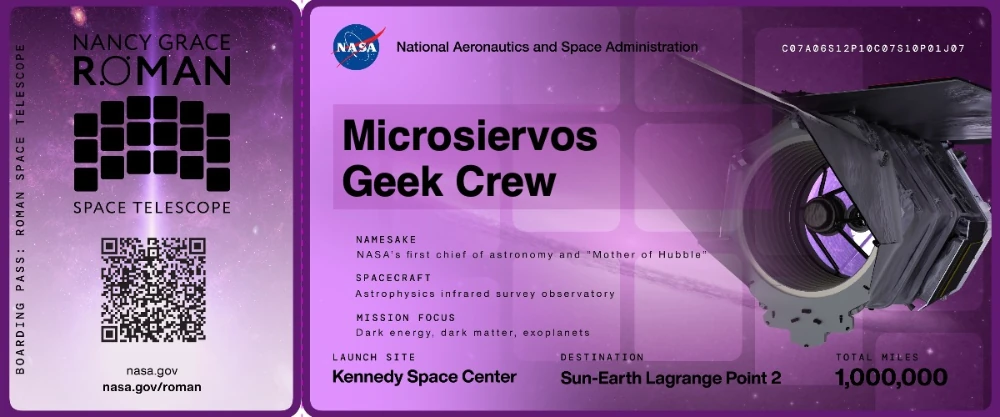
NASA is preparing for the launch of the Nancy Grace Roman Space Telescope, which is ahead of schedule and under budget, with a planned launch date of August 30th. In a unique public outreach initiative, individuals have the opportunity to have their names sent into space aboard the telescope, stored on an SD card. This program, however, has a very tight deadline, with the last day to participate being the day of the article's publication.
The telescope is named in honor of Dr. Nancy Grace Roman, often referred to as the "mother of the Hubble Space Telescope." While not a direct replacement for Hubble, the Roman telescope is considered a similarly capable instrument. Its scientific mission will focus on significant astronomical research areas, including dark energy, dark matter, and the study of exoplanets, among other fields.
Positioned in a halo orbit around the Sun-Earth Lagrange point L2, the telescope will be located approximately 1.5 million kilometers from Earth, extending outwards into the solar system. This orbital location will place it in proximity to the James Webb Space Telescope.
The NASA Roman Space Telescope's public engagement initiative, while fostering public interest in space exploration, highlights the evolving strategies of space agencies to connect with a broader audience. The inclusion of names on an SD card represents a low-cost, high-symbolism method for generating excitement and support for ambitious scientific endeavors. This approach leverages the public's fascination with space to indirectly bolster funding and advocacy for future missions. The telescope's focus on dark energy and dark matter, fundamental mysteries of the universe, underscores the ongoing quest to understand cosmic evolution, a pursuit that will likely intensify with advancements in AI-driven data analysis and theoretical modeling over the next decade. The strategic positioning near the James Webb Space Telescope suggests a coordinated effort to maximize observational synergy and scientific return from the L2 point.
AI-generated to prompt reflection — not editorial opinion, not advice, not a statement of fact. How this works.