NASA's Roman Telescope to Block Starlight for Unprecedented Planet Discoveries
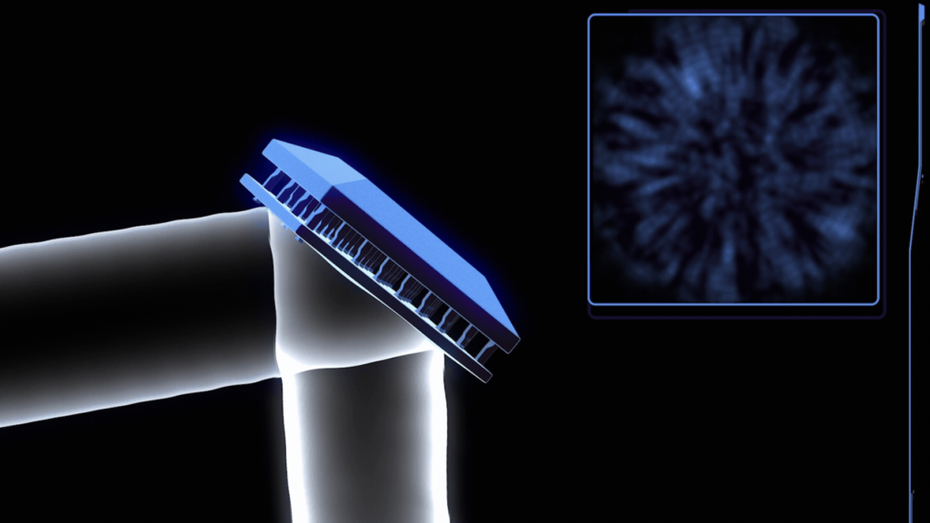
NASA is preparing to launch the Nancy Grace Roman Space Telescope, which will feature a groundbreaking active coronagraph. This technology is designed to block out the intense glare of starlight, a significant challenge in observing exoplanets. By effectively dimming the host star, the Roman telescope aims to reveal a vast number of previously undiscovered planets. These planets could include those similar in size to Earth and located within their stars' habitable zones. The mission's advanced capabilities are expected to dramatically expand our catalog of known exoplanets and deepen our understanding of planetary systems beyond our own. The telescope's ability to filter out starlight is crucial for detecting the faint signals of orbiting worlds. This innovative approach promises to unlock new frontiers in the search for life beyond Earth.
The deployment of an active coronagraph by NASA's Roman Space Telescope represents a significant technological leap in exoplanet detection. By mitigating the overwhelming brightness of host stars, the mission addresses a fundamental observational constraint, potentially democratizing the discovery of smaller, Earth-like planets. This advancement aligns with the long-term scientific imperative to characterize planetary diversity and assess habitability beyond our solar system. The system's success hinges on the precise engineering of the coronagraph and its integration with the telescope's optics, underscoring the critical role of advanced instrumentation in pushing the boundaries of astronomical knowledge. Future missions may build upon this technology to further refine the search for biosignatures in exoplanetary atmospheres.
AI-generated to prompt reflection — not editorial opinion, not advice, not a statement of fact. How this works.