NASA's Viking 1 Lander: 50 Years Since Historic Mars Touchdown
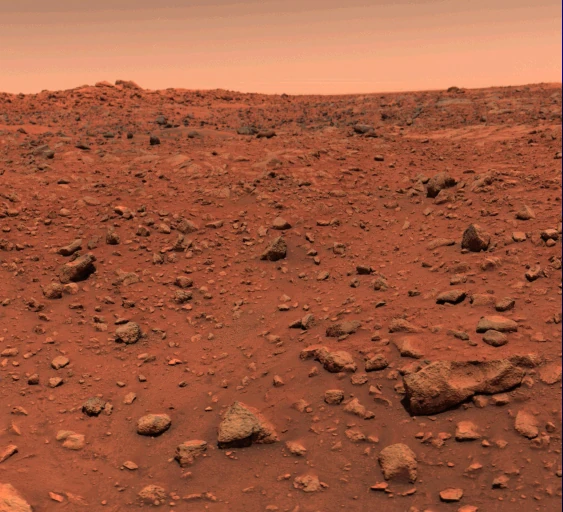
Fifty years ago today, on July 20, 1976, NASA's Viking 1 lander successfully touched down on Mars. While not the first probe to reach the Martian surface, it was the first to achieve a complete, intact landing. Previous Soviet missions, Mars 2 and Mars 3, had less fortunate outcomes; Mars 2 crashed, and Mars 3 transmitted data for only about twenty seconds. In contrast, Viking 1 operated for over six years, transmitting a wealth of images and data. Its mission concluded in early 1983 after a failed software update intended to manage its aging batteries corrupted the antenna orientation software, leading to a loss of contact. During its extensive operational period, the lander captured numerous images and collected data on atmospheric and soil temperatures, humidity, pressure, wind speed and direction. It also analyzed soil samples using a robotic arm to determine their composition. Although a seismograph was included, it was never deployed. A significant point of discussion arose from the results of the Labeled Release (LR) soil analysis instruments, which some interpreted as potential evidence of current Martian life. However, as two other instruments yielded negative results, the prevailing scientific consensus concluded that the data was inconclusive and did not confirm the presence of life. The discovery of perchlorates by the Phoenix Mars Lander and organic molecules by Curiosity and Perseverance has reignited interest in this possibility, though the majority view remains that if life exists on Mars, it has yet to be found.
The Viking 1 mission represents a pivotal moment in Mars exploration, showcasing significant technological advancements in planetary landing and long-term surface operations. While the mission's primary objective of finding definitive evidence of life on Mars remained elusive, the extensive data collected provided invaluable insights into Martian geology and atmospheric conditions, shaping subsequent research. The ambiguity surrounding the LR instrument's results highlights the inherent challenges in detecting biosignatures, particularly in environments with complex geochemistry. Future missions will benefit from the lessons learned regarding instrument calibration, data interpretation, and the potential for abiotic chemical reactions mimicking biological processes. The enduring scientific debate underscores the importance of rigorous verification and the need for multiple lines of evidence when addressing profound questions about extraterrestrial life.
AI-generated to prompt reflection — not editorial opinion, not advice, not a statement of fact. How this works.